
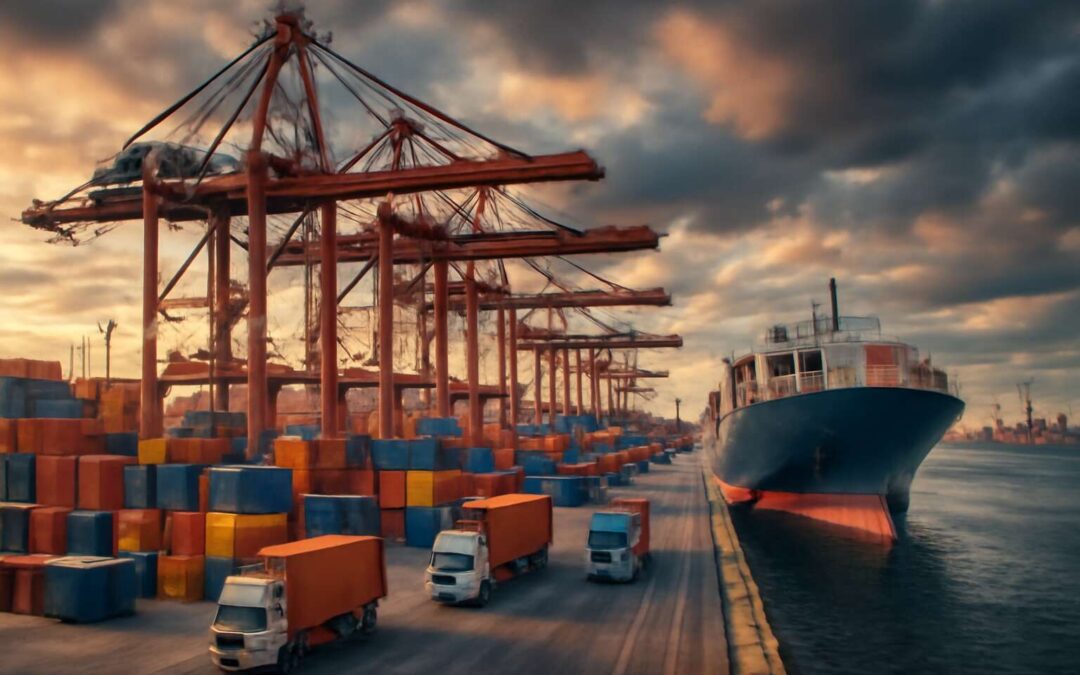
Origins of Shipping Containers
Historical milestones in containerization
Over 90% of non-bulk cargo travels by container ship, turning a humble steel box into a global passport. So, where are shipping containers from? The answer lies in a century of invention that bridged farms to factories and oceans to rail yards. From timber crates to standardized boxes, the flow of goods runs like clockwork, stitching continents together. South Africa’s ports—Durban and Cape Town—sit at the heart of this maritime chorus.
Key milestones along this voyage include:
- 1956: first container ship, Ideal X, sails the seas.
- 1968: ISO standardizes sizes for true intermodal moves.
- 1970s–80s: global networks knit ports, rails, and roads.
Today, the container is a living hub of commerce, with reefers and high-cube containers ensuring freshness and speed. For South Africa, the legacy shapes Durban’s logistics, and you can trace where are shipping containers from as ships arrive from Asia and Europe.
Key inventors and early adopters
Origins of the modern steel box trace to a pragmatic clash of trucking grit and shipyard ambition. Malcolm McLean, a restless transporter, partnered with engineer Keith Tantlinger to shrink bulky freight into a modular cube with secure corners and twist-locks. The design was simple, rugged, scalable—and the idea caught fire in ports that began to imagine a single journey, not a scattered set of legs!
So, where are shipping containers from? They spring from a circle of early adopters who treated logistics as choreography rather than a sequence of steps. In South Africa, Durban’s harbor embodies that evolution, seeing boxes move seamlessly from farms to factories as ships arrive from Asia and Europe.
- Sea-Land Service, the pioneering carrier built around containerized shipping
- Port authorities and forward-thinking shippers who embraced standardization
Impact on global trade in the 20th century
Containers arrived as a quiet revolution, turning ships into moving warehouses and the sea into a highway of possibility. Planners learned to measure time as keenly as space, crafting faster, leaner exchanges that stitched continents with steel and trust.
Where are shipping containers from? They spring from a tight circle of innovation—shipyards, engineers, and port authorities bound by standardization, not coincidence. A cube, uniform corners, and twist-locks made interchanging modes possible, like a single sentence carried across modes.
- Standardized dimensions and twist-locks
- Intermodal compatibility across ships, rails, and trucks
- Global port systems embracing quick cargo handling
Across South Africa, Durban and beyond, containerized trade turns farms into factories and back again, a choreography that keeps goods moving as ships arrive from Asia and Europe. In this circle, origin becomes a map of routes rather than a birthplace.
Early container sizes and standards
The box that quietly rewired global commerce wears a dull exterior and a passport-like résumé. “The box is the passport of global trade,” a veteran broker likes to say, and the line lands with surprising heft.
The query, where are shipping containers from, echoes through the yard: they spring from a tight circle of innovation—shipyards, engineers, and port authorities bound by standardization. A cube, uniform corners, and twist-locks made interchanging modes possible, like a single sentence carried across ships, rails, and trucks.
Early container sizes and standards crystallized into a practical trio:
- 20-foot standard length
- 40-foot standard length
- 8’6″ high cube variation
In Durban and across South Africa, this circle of standardization keeps goods moving with a reliability that feels almost genteel—until the crane sings and a ship sighs into port.
Transition from break-bulk to standardized containers
Containerization didn’t just tidy up cargo; it rewired global commerce. By the mid-1960s, port handling costs had plunged, and ships could move goods in days rather than weeks. The question where are shipping containers from began to crystallize into a global push for standardization—and one box, many journeys, across ships, rails, and trucks.
That transition from break-bulk to a standardized box demanded more than a clever idea; it required a shared anatomy. Intermodal thinking, reliable locking corners, and unified port procedures let a crate survive long hauls and rough handling.
- Intermodal thinking: one box across many journeys
- Reliable locking corners and corner fittings
- Unified port-to-rail-to-road procedures
Durban’s cranes still dance to that same tune—box by box, economy by economy.
Global Manufacturing Hubs and Leaders
Major producers by country and region
Every day, millions of containers begin their voyage—and most are born in East Asia. When you ask where are shipping containers from, the answer points first to Asia, then to Europe and the Americas. Factories here run with ferocious precision, shaping a durable supply that nudges prices, lead times, and the resilience of global trade.
Major producers by region include:
- China – the dominant engine, coastal mills at scale.
- Southeast Asia – Vietnam and neighbors expanding capacity.
- Europe and North America – steady local production and refurbishing for reuse.
For South Africa, these currents translate into schedule reliability and freight costs as containers travel from distant shores to Durban and Cape Town.
Role of shipyards and steel suppliers
Global trade runs on a stubbornly simple schedule: the bulk of new containers are born in East Asia, then travel to every port on earth. If you ask where are shipping containers from, the answer almost always points to Asia first, with Europe and the Americas faithfully playing catch-up.
Shipyards and steel suppliers are the drumbeat of this system. They decide container dimensions, corrosion resistance, and structural durability—think of them as the combo of swordsmiths and locksmiths, but for cargo. A tight supplier ecosystem means shorter lead times, steadier prices, and fewer surprises when the crane grabs the hook.
- World-class shipyards shaping ocean-going and feeder fleets
- Steel suppliers forging hull skins and corners of durability
- Logistics networks turning supply into predictable cycles
For South Africa, the ripple is felt at Durban and Cape Town: reliable schedules, predictable freight costs, and a steady stream of refurbished units that keep containers cycling instead of gathering dust.
Factory capacities and production cycles
Global manufacturing choreography is relentless: most new containers begin life in East Asia, then sail to ports around the world. The question where are shipping containers from? The answer points to vast factory campuses where scale meets precision, and orders chase production calendars with a ghostly cadence—like a clock that never forgives.
Global Manufacturing Hubs and Leaders shape factory capacities and production cycles. Lines hum in synchronized shifts, parts flow in modules, and automation keeps quality in check. Here are the engines behind the global fleet:
- China’s coastal industrial belts drive the bulk with high-volume, standardized modules
- South Korea and Taiwan supply precision fittings, audits, and rapid changeovers
- Vietnam and India are expanding capacity, embracing lean lines and shorter onboarding
For South Africa, the effect lands in Durban and Cape Town: reliable schedules, predictable freight costs, and a steady rhythm of refurbished units that keep containers moving rather than gathering dust.
Quality control and standardization in manufacturing
More than 80% of global trade moves by container ships, a quiet axis guiding markets and ports alike! So, where are shipping containers from? They arise from vast factory campuses where scale meets precision, and orders run on calendars with patient, inexorable rhythm. The engines begin in China’s coastal belts, pass through South Korea and Taiwan, and reach Vietnam and India; in South Africa, Durban and Cape Town anchor reliable schedules.
Quality control wears a discreet crown, a lattice of standards that keeps the fleet trustworthy. From exact fittings to modular assemblies, standardized processes and rigorous audits ensure every container meets a common, high ceiling.
- Standardized modules and fittings
- ISO-aligned quality systems
- Traceability from batch to berth
- Independent audits and improvements
This quiet governance lets buyers move forward with confidence as voyages follow in orderly procession.
Supply chain resilience of manufacturers
More than 80% of global trade moves by container ships, a quiet engine behind every warehouse door. Global manufacturing hubs have grown into resilient ecosystems where scale meets risk management. The big question: where are shipping containers from? It is a map of supplier diversity, port efficiency, and steady cadence.
As a South African reader, you feel the pull of Asia’s corridors and the growing steadiness of regional links in Africa and the Middle East, where ships cycle with a patient, inexorable rhythm.
Key manufacturing hubs and leaders in supply chain resilience include:
- China’s coastal belts and manufacturing clusters
- India’s mass-production corridors and export hubs
- Vietnam and Turkey rising as agile assembly sites
These patterns shape not just delivery times but the confidence of buyers and operators who crave reliable partnerships and long-horizon thinking.
Materials, Design, and Standards
Materials used in containers: steel, coatings, corrosion resistance
Shipping containers are everywhere, and the steel inside them is tougher than a Cape Town wind. The question where are shipping containers from is answered by marine-grade steel and resilient coatings that guard against salt spray and time.
Design-wise, wall thickness, corner castings, and floor structure matter as much as the paint. The goal is modularity that survives stacking and South Africa’s busy ports, while ISO compatibility keeps ships and trucks speaking the same language.
Standards set the rules: ISO 668 for dimensions, ISO 1496 for performance, and coating guidelines for longevity. Together they keep the fleet interoperable; this is how we know where are shipping containers from.
ISO and CSC standards overview
In the harbor’s constant murmur, the question where are shipping containers from becomes a real story of fireproof steel and forgiving coatings. I’ve watched marine-grade steel and protective coatings guard cargo against salt spray and time.
- Marine-grade steel tuned for ductility and resilience
- Coatings that resist salt spray and time
- Designs that support long service life and reuse
Design-wise, wall thickness, corner castings, and floor structure matter as much as the paint. Modularity must survive stacking and South Africa’s busy ports, while precise ISO sizing keeps ships and trucks speaking the same language.
ISO 668 for dimensions, ISO 1496 for performance, and coating guidelines for longevity, plus CSC standards, form the invisible grammar of intermodal trade. I’ve seen these rules keep the fleet interoperable across ocean and inland legs.
Dimensional standards and container types
In the harbor’s glow, the question where are shipping containers from lingers like a sea breeze. They begin as forged steel, tempered for ductility, and clad in coatings that resist salt spray and time. Their floors bear the memory of countless journeys.
- Steel crafted for resilience
- Coatings resisting coastal corrosion
- Floor systems built for reuse
Design signatures—wall thickness, corner castings, and floor structure—shape longevity as surely as paint. Modularity must survive stacking in South Africa’s busy ports, while precise ISO sizing keeps ships and trucks speaking the same language.
- Wall thickness and structural grade
- Corner casting compatibility
- Floor assembly and load paths
Dimensional standards guide what fits and moves between container yards and the back of trucks. They cover container types—from standard dry vans to reefers—ensuring compatibility across networks. ISO 668 maps external dimensions, ISO 1496 measures performance, and CSC governs safety. These rules whisper the language of global intermodal trade.
Lifecycle, repair, and reconditioning considerations
In every port, the question where are shipping containers from lingers like a sea breeze. They begin as tempered steel from mills, cloaked with coatings that shrug off salt. Their floors carry the memory of journeys and a stubborn, long life ahead.
Design choices shape repairability and reconditioning. A container moving through Southern Africa benefits from modular components, accessible fasteners, and durable flooring that can be refreshed rather than scrapped. The result is a chassis ready for renewed service and a second life.
Lifecycle, repair, and reconditioning sit at the center of container thinking, guided by international standards that shape refurbishment and reuse. Rigorous inspections, corrosion control, flooring updates, and coating refreshes sustain value and safety. The conversation often looks like this:
- Inspection intervals and non-destructive testing to verify structural integrity
- Flooring replacement and corrosion control within serviceable load paths
- Coating refurbishment and seal integrity to resist maritime weather
Supply Chain, Logistics, and Trade Routes
Global shipping routes and hub ports
Over 80% of global trade by volume travels by sea, and containerized cargo keeps that vast machine humming. Curious minds ask where are shipping containers from, and the answer is a living map: a tapestry of factories, shipyards, and inland networks that feed the world’s shelves and factories.
In modern supply chains, containers are the steadfast link between production and distribution. They ride one leg of a longer voyage that stretches from Asia’s manufacturing powerhouses through Europe and the Middle East to Africa and the Americas. Trade routes funnel cargo through strategic hubs, where ships are unloaded, sorted, and re-stacked for the next leg. Hub ports become the beating hearts of the system.
- Shanghai, China
- Singapore
- Dubai (Jebel Ali), UAE
- Rotterdam, Netherlands
- Durban, South Africa
From Durban onward, inland corridors reach destinations across the continent, demonstrating the resilience and reach of global logistics.
Impact of demand on sourcing regions
More than 80% of global trade travels by sea, and demand pulses travel faster than the ships themselves. This is the living map of where are shipping containers from—a tapestry stitched by factories, yards, and inland corridors that feed South Africa’s shelves and factories. Durban anchors the flow, while the Cape Town gateway adds resilience to the national supply chain.
Demand globalizes or localizes sourcing decisions with quiet grace. Factories ready capacity for peak seasons, shippers re-route to balance risk, and inland corridors push goods from port to market with punctuality that feels almost poetic.
- Seasonal demand alignment
- Regional supplier diversification
- Buffer inventory strategies
In South Africa, these dynamics unfold along Durban’s harbor, the N3 corridor to Gauteng, and the coastal-to-inland spine that keeps supermarkets stocked and factories humming.
Container shortages and surpluses
Supply chains move with a quiet velocity—the calendar of cargo never sleeps. In transit, ships carry cargo; in truth, demand travels faster, reshaping routes before the yard gates swing open. Shortages and surpluses weave through Durban and Cape Town like a living map, testing resilience and grace. When we ask where are shipping containers from, we trace origins from distant factories to inland corridors—a melody of routes guiding South Africa’s shelves.
- Port congestion and blank sailings tighten the gap between inflow and demand
- Seasonal peaks stretch capacity across corridors and warehouses
- Inland bottlenecks ripple along the N3 to Gauteng
From quay to Gauteng hinterland, logistics teams choreograph timing with quiet precision. Shortages sharpen memory of gaps; surpluses lend space for the next wave. The art is balance—between risk and rhythm—so South Africa can keep shelves stocked and factories humming, even as the sea keeps its secrets.
Recycling and repurposing of used containers
Supply chains in South Africa move with a patient, coastal tempo—every quay and inland corridor a thread in a larger loom. In this puzzle, where are shipping containers from becomes a map of intent: steel skins forged in distant yards, ferried to prime ports, and rerouted along the N3 toward Gauteng. Logistics teams choreograph timing with quiet precision, honoring the rhythm between inflow and demand so shelves stay stocked even as the sea keeps its secrets.
Used containers shed their former identities and enter a second life—walled canvases for business, shelter, and sustainability. In recycling yards they are cut, reinforced, and repurposed into modular clinics, classrooms, and storage modules that travel as needs shift. Their resilience reshapes trade routes, turning surplus into value for South Africa’s towns and cities again! Consider these repurposing paths:
- Flexible clinics and emergency spaces
- Pop-up shops and markets
- Storage and workshop modules
Regulatory and trade policy influences on sourcing
In 2023, global container trade rebounded to near pre-pandemic volumes, a quiet reminder that policy and price move like ships on the horizon. Consider the question where are shipping containers from, and the map unfurls across ports, production yards, and the rules that steer them.
Regulatory and trade policy influences on sourcing shape every link — I’ve seen decisions flip as origin is proven and customs clearances swing. In southern Africa, AfCFTA and SADC arrangements color routes, while currency swings, local content demands, and environmental standards tilt choices toward certain suppliers.
- Tariff regimes and preferential trade agreements that steer supplier choices
- Sanctions, export controls, and origin verification that scrub risk from the ledger
- Customs clearance timelines and digital documentation that decide when shelves finally fill
Sustainability, Compliance, and Future Trends
Eco-friendly manufacturing practices and materials
More than 90 percent of global trade rides on the humble steel box; a fact that would make even the sternest port captain crack a smile. Sustainability isn’t a fad—it’s ballast: lower emissions, durable coatings, and smarter mills. If you’re curious where are shipping containers from, the answer lies in conscientious steelmakers!
Compliance is about traceability and trust more than paperwork.
- Transparent supplier audits and third-party certifications
- Standards-aligned recordkeeping with real-time traceability
- Risk assessment and supplier diversification to avoid single-source bottlenecks
These steps keep commerce moving with conscience.
Future trends whisper of digital twins, modular designs, and circular economies. In South Africa, that means resilient connections at Cape Town and Durban, with lean energy use.
Certification programs and audits
More than 90 percent of global trade rides on the humble steel box, a fact that glitters like a lighthouse over the harbor. If you wonder where are shipping containers from, the answer lies with conscientious steelmakers and a network of certification that keeps every mile of sea lanes true and transparent.
Sustainability here means cleaner mills, lower energy intensity, and durable, recyclable coatings that extend container life. In South Africa, that translates to lean plants near Cape Town and Durban, with smarter energy use guiding the mill.
Compliance rests on trust, traceability, and independent oversight. A modern program embraces:
- Independent certifications from esteemed global bodies
- Transparent audit trails with standardized reporting
- Ongoing certification upkeep and supplier risk reviews
Future Trends bring digital provenance, blockchain-backed records, and remote audits, steering toward a more transparent and circular design ethos—an evolving chorus that keeps South Africa’s ports in step with the world.
Innovation in container design and materials
Sustainability threads through every seam of the modern container. Cleaner mills, energy-smart processing, and durable coatings that outlast storms—these choices temper the voyage from forge to freighter. In practice, that means less waste, longer life, and a quieter footprint on the coastlines that cradle our trade.
Compliance rests on trust, traceability, and independent oversight. A compact framework favors parallel certification bodies, transparent audit trails, and continuous supplier reviews.
- Global oversight bodies
- Transparent audit trails
- Ongoing supplier reviews
Future Trends bring digital provenance, blockchain-backed records, and remote audits, steering toward a circular design ethos—an evolving chorus that keeps South Africa’s ports in step with the world. And for those wondering where are shipping containers from, the answer dissolves into a map of steel, standards, and stewardship.
Regional shifts and future sourcing patterns
In practice, cleaner mills and energy-smart processing yield a container that survives longer with less waste. Coatings resist the salt spray, and recycled steel returns to the cycle. The effect is a leaner footprint along South Africa’s restless coastline.
Compliance rests on trust, traceability, and independent oversight. A lean framework favors parallel certification bodies, transparent audit trails, and continuous supplier reviews.
- Global oversight bodies
- Transparent audit trails
- Ongoing supplier reviews
Future Trends bring digital provenance, blockchain-backed records, and remote audits, steering toward a circular design ethos—an evolving chorus that keeps South Africa’s ports in step with the world. As whispers travel the docks, where are shipping containers from becomes a map of steel, standards, and stewardship. Regional shifts hint at near-shoring and diversified routes across Africa, Europe, and Asia, trimming transit times and reducing risk.
