
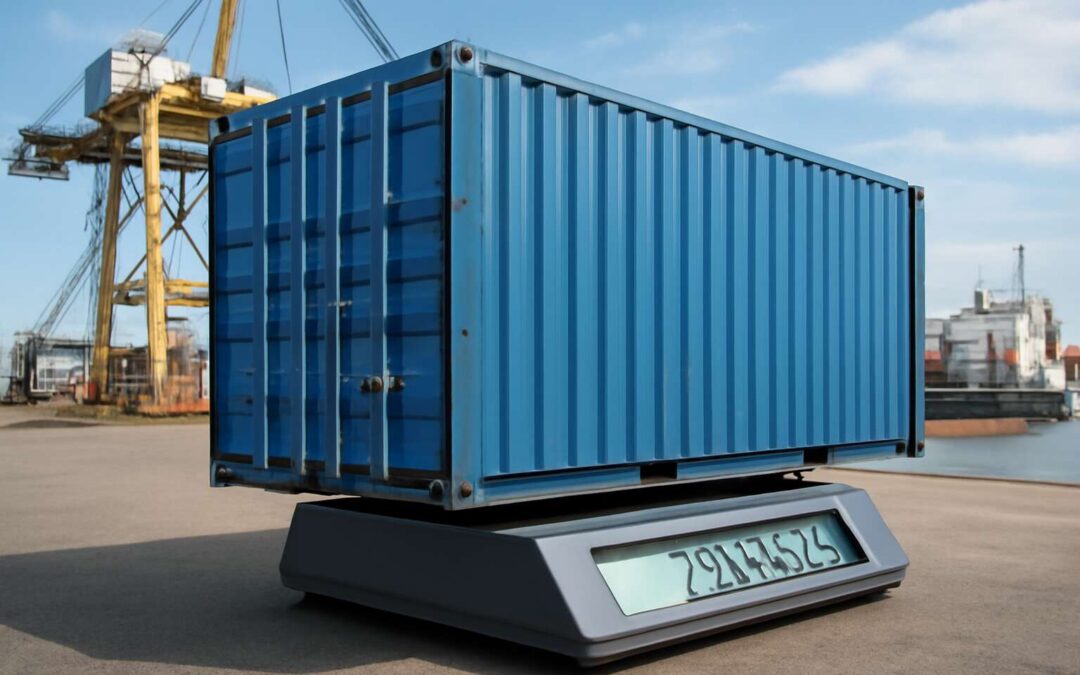
Weight Basics for Shipping Containers
Tare Weight Explained
Aptly heavy yet utterly precise, a 20-foot steel box weighs about 2.3 tonnes when empty—a quiet earthquake in the logistics world. The question of what do shipping containers weigh is answered by tare weight, the baseline that steadies every voyage. This figure anchors shipments from port to warehouse.
Tare weight is the container’s own heft—the weight you must subtract from its gross capacity to find usable space. In practice, standard 40-foot units carry more heft, and fittings or refrigeration units tilt the numbers. In South Africa, port operators routinely reference tare to forecast road and rail movements as cargo moves inland.
Knowing the tare helps interpret the math of freight; payload equals the certified maximum gross mass minus tare. The difference is the cargo cushion—enough to stack pallets, cartons, and dreams within legal limits.
Gross Weight vs Net Weight
Weight is the hinge of every voyage. In Durban’s dawn-lit docks, a loaded 40-foot container can weigh roughly 30 tonnes—a quiet gravity behind each crane’s sigh and every inland road leg.
Think of two scale readings: gross weight, the container plus cargo, and net weight, the cargo alone. The difference is the container’s own mass, a constant that shapes clearance, route planning, and compliance across SA’s corridors.
Along South Africa’s ports and freight network, operators track these figures to choreograph road and rail moves inland. The simple question—what do shipping containers weigh—sits at the heart of every shipment, hidden in the arithmetic of gross versus net.
Standard Weight Units Used in the Industry
Weight basics for shipping containers matter more than a dawn horn on the Durban harbor. When someone asks what do shipping containers weigh, the answer comes in a few universal units that travel well from warehouse to shipyard. In South Africa, you’ll see tonnes, kilograms, and pounds shaping every bill of lading and safety check.
Common weight units you’ll encounter:
- tonnes (t)
- kilograms (kg)
- pounds (lb)
These units keep crews across SA’s freight corridors aligned, from Durban’s docks to inland depots. They ensure cranes coordinate lifts and trucks meet safe payloads, with every shipment’s mass understood at a glance.
How Weight Is Specified on Shipping Documentation
The mass in travel isn’t poetry; it’s numbers that make port cranes hum. A 20-foot container’s tare sits around 2,000 kg, while a 40-foot version nears 2,300 kg. A fully loaded box can top 30,000 kg. So, what do shipping containers weigh? The answer threads through the dockside ledger and the logbook, not the cargo hold alone.
On shipping docs, weight isn’t a guess; it’s a declared figure. The Verified Gross Mass (VGM) is provided before lifting and is typically expressed in tonnes or kilograms. Across SA, these numbers bind into the Bill of Lading, keeping cranes and checks aligned. I’ve seen delays when a decimal wanders off its mark!
To keep the narrative tidy, note these essential doc fields:
- Verified Gross Mass (VGM)
- Container number and seal details
- Voyage and Bill of Lading references
Container Types and Their Weights
Dry Standard Containers (20ft and 40ft)
Weight is the quiet compass guiding every shipment. When you ask what do shipping containers weigh, two stalwart forms carry the load: the 20ft dry standard and the 40ft dry standard, common on South Africa’s rails and roads.
Here are the practical figures, with a focus on empty mass and the weight ceiling that governs what can ride inside:
- 20ft dry standard: base mass roughly 2,260–2,350 kg; total allowed weight 24,000 kg; goods payload about 21,650–21,740 kg.
- 40ft dry standard: base mass roughly 3,750–4,800 kg; total allowed weight 30,480 kg; goods payload about 25,680–26,730 kg.
In South Africa’s ports and fleet, these numbers ensure safe, efficient planning from container yard to customer doorstep.
Dry High-Cube Variants
In the freight world, the High-Cube variant is the taller, roomier sibling—built for more interior volume without altering safety’s backbone. For those curious about what do shipping containers weigh, the answer rests in tare and the fixed gross limit that guides every voyage from Durban’s docks to inland depots.
20ft high-cube dry containers carry a base mass roughly 2,420–2,520 kg, with a total allowed weight of 24,000 kg. That leaves about 21,480–21,580 kg of payload, a touch leaner than standard boxes because added height nudges the tare upward.
40ft high-cube dry containers are heavier: base mass around 3,900–4,900 kg, while the gross ceiling stays 30,480 kg. The payload sits roughly 25,580–26,580 kg, balancing extra tare against greater interior capacity.
- More usable interior height for tall items.
- Same gross ceiling as standard sizes.
- Higher tare means slightly lower payload.
Refrigerated Containers (Reefers) Weight
In the frost-kissed theater of Durban’s freight, reefers carry a quiet magic—and a heavier baseline than dry boxes. The tare heft comes from insulation, cooling coils, and a stubborn compressor that never quite rests.
A 20ft reefer’s tare sits around 3,100–4,000 kg, with a gross cap near 28,000–30,000 kg. A 40ft reefer weighs more, tare roughly 6,000–7,500 kg, though the gross limit remains in a similar neighborhood. So, what do shipping containers weigh when a refrigeration unit sits inside? The heavier tare squeezes usable payload but preserves interior climate control and reliability.
- Higher tare than dry equivalents; payload takes a hit.
- Interior remains temperature-controlled, ideal for perishables.
- Exterior dimensions still align with standard ISO slots.
Special Purpose Containers Open-Top, Flat-Rack, and Half-Height
In the theater of global logistics, special-purpose containers play the role of puzzle pieces that fit where standard boxes fail. So, what do shipping containers weigh when you add Open-Top, Flat-Rack, or Half-Height designs to the mix? The answer is a modest one: tare grows with hardware, and payload is nudged downward, but the versatility is priceless.
Open-Top shells carry bulky items from above, their roof frame and tarpaulin lifting the tare beyond a dry box’s baseline. Flat-Rack units trade interior living space for rugged exterior frames; their end-frames and bracing push tare higher, yet they welcome wide, heavy cargo with little fuss. Half-Height containers maximize floor space for bulk cargo and lower height generosity means different handling; the tare profile climbs due to reinforced floors and supports, while payload remains competitive for bulk goods.
- Open-Top: higher tare from roof hardware; best for tall or oversize goods accessed from above.
- Flat-Rack: extra framing increases tare; ideal for wide, sturdy loads and quick, end-to-end handling.
- Half-Height: reinforced floor and compact height raise tare; strong for dense bulk goods where height is a constraint.
These distinctions illustrate how weight behavior shifts with container type, shaping every transit through the South African port network.
Weight Calculation in Practice
Calculating Tare and Payload Capacity
A single container’s weight isn’t just a number—it’s a knot in the chain of global trade. If you’re asking what do shipping containers weigh, you’re chasing a balance of tare and payload shaped by size, build, and compliance. In South Africa’s busy ports, these figures decide how trucks move and how quickly cargo becomes revenue. I’ve seen how a few hundred kilos can ripple through a schedule on the quay.
In practice, weight calculation hinges on tare and payload capacity. Start with the gross weight shown on the container’s documentation, then subtract the tare to reveal the payload. The remainder must stay within legal limits and the ship’s stability margins. Consider these influences:
- Container type and construction
- Maximum gross weight allowances
- Cargo density and distribution
Each shipment becomes a mini-mystery of space and balance, where precision keeps operations smooth and on schedule.
Estimating Load Limits for Different Voyage Routes
Across Durban’s docks and Cape Town’s quays, a few hundred kilos can ripple through a schedule and redraw a crane’s tempo. In the weaving of global trade, the figure is a choreography of tare, payload, and the margins that keep ships steady. It is a tale told in numbers, yet felt in the sway of a rolling deck.
Weight calculation in practice hinges on voyage routes. Start with gross weight, then subtract tare to see payload; the allowable gross weight shifts with the route and the ship’s stability margins.
- Route length and weather expectations
- Port-specific gross weight allowances
- Cargo density and distribution inside the container
So, what do shipping containers weigh in practice when routes bend and ports tighten their rules? Each voyage becomes a micro-mystery of space and balance, where numbers whisper to cranes and captains alike.
Impact of Palletized Goods and Freight on Weight
Across Durban’s docks and Cape Town’s quays, weight margins decide tempo as surely as tides decide a voyage. A single misestimate can ripple through a crane cycle and turn a smooth lift into a minor drama—what do shipping containers weigh becomes ballast for a schedule, not a party trick. In practice, weight calculation hinges on palletized loads riding the voyage’s logistics theatre.
Palletized goods tilt the numbers with their own swagger. Each pallet adds tare, while distribution on the floor dictates how payload gathers under a rolling deck. The result is a choreography of balance:
- Pallet type and weight
- Load distribution across the floor
- Density of contents and stacking height
- Securing methods that shift the centre of gravity
Those micro-actions matter; they shape allowable gross weight and the margins that keep cranes patient and skippers serene. The numbers, after all, are a social grace note in global trade.
Weight Tracking During Loading and Unloading
Weight tracking is theater on the dockside stage. what do shipping containers weigh is not a parlor trick but the ballast that keeps a crane patient and a schedule intact. On Durban’s docks and Cape Town’s quays, live weigh readings and the carrier manifest must sing in unison as a container moves from yard to ship.
There is a quiet drama to the moment of lift; operators read the numbers, dispatchers nod, and the crew adjusts bracing in real time. A mistake travels fast, and every kilo is a note in a larger symphony of global logistics—South Africa’s gateways to the world balancing with the poise of a grand piano in a piano bar.
Standards, Safety, and Compliance
ISO, CSC, and Other Weight Standards
Weight is the quiet verdict of a cargo journey. In South Africa’s busy ports, what do shipping containers weigh shapes crane schedules and insurance lines. ISO standards align dimensions and masses so Durban and Cape Town move with practiced precision.
Safety and compliance live in the CSC regime—the Convention for Safe Containers. It requires periodic inspections and a Safety Certificate to keep the unit road, rail, and port ready.
- Periodic inspections to maintain structural integrity
- CSC safety certificate renewal on schedule
- Verification of lashing points, doors, and corner fittings
Beyond CSC, other weight standards crowd the conversation: the maximum gross weight, payload capacity, and the way mass is documented. ISO 668 and ISO 1496 help standardize how much mass a container can bear within South Africa’s logistics network.
- Maximum Gross Weight (MGW) defined by container type
- Payload equals MGW minus tare weight
- Documentation reflecting weight class to prevent delays at SA ports
Weight Verification Methods and Equipment
Crane clocks and port schedules hinge on one stubborn question: what do shipping containers weigh, exactly? In South Africa’s busy harbours, every kilogram matters—from crane lift plans to insurance lines. The answer isn’t guesswork; it’s verified with standard, traceable methods that keep cargo moving and compliant.
Weight verification methods and equipment fuse precision with practicality. Static weighbridges provide a ground-truth mass at the quay; portable floor scales offer on-the-spot checks without slowing operations; crane scales read mass during lifts; and load cells tied into critical fittings capture dynamic loads. These readings feed into the documentation trail that authorities expect.
- Static weighbridges for terminal-level mass confirmation
- Portable floor scales for quick yard checks
- Crane or hoist-mounted scales for live lift verification
- Integrated load cells and shackles for point-mass accuracy
Safety Margins for Lifting and Transport
When the Durban and Cape Town quays hum into life, the question still lingers: what do shipping containers weigh? It’s not guessing; it’s a discipline—standards, safety, and traceable margins—that keeps lifts predictable and cargo moving with the quiet clockwork of the dock.
Safety margins must be embedded in every lift plan. Consider these pillars:
- Minimum factor of safety in lifting gear and shackles
- Clear tolerances for dynamic loads during accel and decel
- Buffer payload for palletized goods and incidental shifts
These guardrails translate into smoother operations, compliant paperwork, and real-time confidence on the dock.
Regional Regulations and Documentation Requirements
Most maritime arithmetic hinges on standards, safety, and the quiet discipline of compliance. When you ask what do shipping containers weigh, the question resolves into traceable margins and clear documentation that travels with the cargo through Durban’s gates to Cape Town’s docks.
Standards ensure cargo safety; safety margins, and regional regulations may demand weights be verified, and proper documentation accompany each shipment. In Southern Africa, port authorities emphasise traceability, consistent reporting, and risk-aware lifting practices as ships cycle in and out. I’ve seen how this quiet discipline steadies the hand at the crane!
The following documents are typically required:
- Weight certificate and verified gross mass
- Load plan
- Cargo manifest
- CSC plate verification
These rules aren’t a cage but a compass, guiding every lift through the clatter of the harbor while preserving predictability, legality, and trust between shippers and stevedores.
Maintenance, Inspection, and Record-Keeping of Container Weights
Standardised weighing isn’t a dull ritual; it’s the backbone of safe horizons at sea and on land. In South Africa’s busy ports, what do shipping containers weigh becomes a conversation about traceability, accountability, and calm efficiency. When weights are verified, margins stay truthful and the entire supply chain breathes easier, from dockworker to dispatcher to consignee.
Maintenance, inspection, and meticulous record-keeping keep those numbers honest. The following practices form the spine of reliable container weights:
- Calibration schedules for scales and load cells ensure accuracy across shifts
- Regular inspection of rigging, chassis, and supporting gear to catch wear before it affects readings
- Digital record-keeping with tamper-evident logs and audit trails
- Operator training that links safe lifting with precise data capture
When these elements align, weight data travels with the cargo as a quiet assurance of safety and compliance across Durban’s gates to Cape Town’s docks.
