
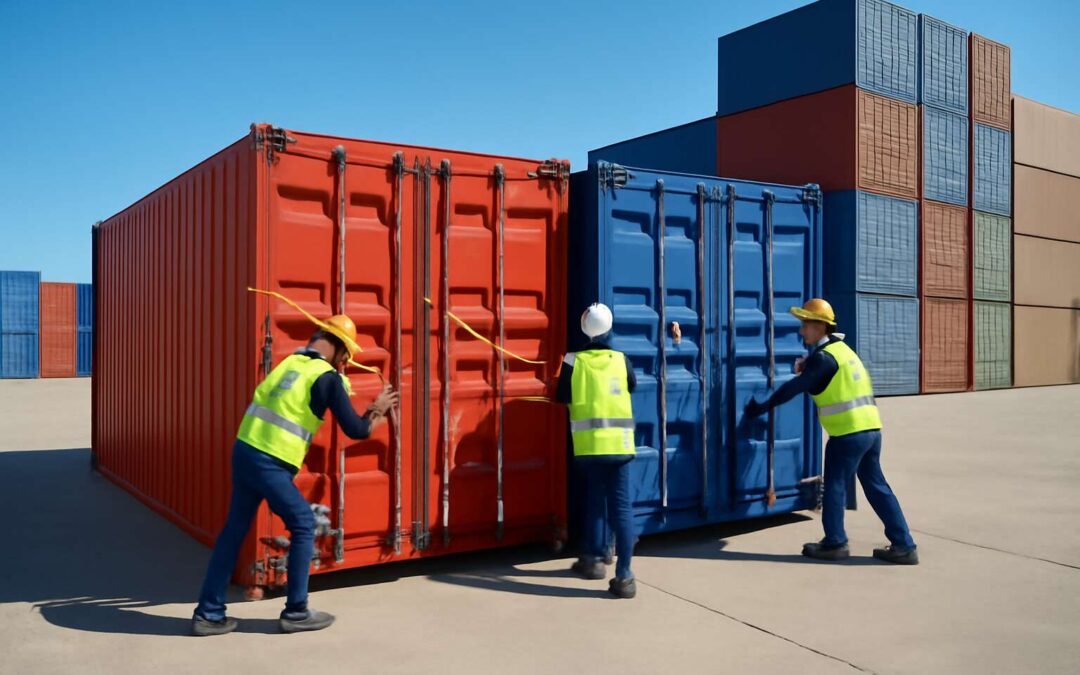
Feasibility and planning for crane-free stacking
Site evaluation and ground stability
“Stability isn’t glamorous, it’s the quiet engine of progress,” notes a seasoned yardsman. In the inquiry into how to stack shipping containers without a crane, feasibility and planning anchor every decision. South Africa’s varied terrain makes ground truthing essential before any crane-free approach can be contemplated.
Feasibility and planning hinge on rigorous site evaluation and ground stability. The following factors shape whether crane-free stacking can work in practice:
- Surface uniformity and bearing capacity
- Drainage, moisture, and freeze–thaw resilience
- Grade, slope, and lateral stability
- Access for temporary supports and maneuvering equipment
Without a crane, the yard’s layout, soil profile, and weather exposure dictate safety margins and contingency buffers. Careful alignment with local regulations and stakeholder expectations keeps operations resilient and economical.
Container condition and stacking compatibility
In the quiet math of feasibility, every container’s life story matters. In the quest for how to stack shipping containers without a crane, it demands more than clever rigging; it requires a chorus of condition and compatibility that sings under load. In South Africa’s bustling yards, aging steel meets renewed purpose, and planning must weigh corrosion, floor wear, and corner castings against the geometry of stacking. The aim is to foresee performance and honor regulations as weather and ground tilt toward certainty.
- Container condition: assess structural integrity, floor, corner castings, and corrosion for stability.
- Stacking compatibility: ensure identical dimensions and corner alignment to maintain load paths.
When these considerations come together, feasibility appears not as risk but as a practiced art. The South African landscape—its heat, rain, and red soils—shapes every judgment, keeping operations resilient and economical.
Load limits and spacing for safe height
In South Africa’s bustling yards, feasibility wears the face of careful arithmetic rather than luck. For those asking how to stack shipping containers without a crane, planning is the difference between delay and delivery. It becomes a quiet dialogue with load paths and ground behavior under sun and rain!
Load limits carve the ceiling of possibility; each container adds mass and a live load that must travel safely through the stack beneath. Spacing is not nicety but a breathing room that keeps twist-locks aligned and doors operable as height grows.
- Uniform dimensions and corner alignment to preserve load paths
- Solid ground bearing and drainage to prevent settlement
- Conservative load margins for dynamic forces
- Clear gaps to allow inspection and movement between stacks
All of this unfolds under a South African climate that tests heat and rain with vigor, turning planning into resilience rather than risk.
Safety compliance and permits for manual stacking
Feasibility and planning for crane-free stacking hinges on more than grit; it’s budgeting, timing, and a weather-smart mindset. In South Africa’s bustling yards, numbers trump luck, and a robust plan keeps forklifts and fingers out of trouble. If you’re asking how to stack shipping containers without a crane, the feasibility study is your compass—checking ground behavior, weight tolerance, and crew capability before any brick-and-mortar decision is made. A good plan surveys access, space, and how the stack will breathe under sun and rain.
Safety compliance and permits for manual stacking aren’t red tape; they’re the spine of a responsible operation. Local bylaws, insurer requirements, and worker-safety rules shape what’s acceptable on site. Expect clear roles, documented training, and oversight that keeps momentum from turning into misalignment.
- Permitting alignment with municipal and industry standards
- PPE, supervised training, and written procedures
- Inspection logs and incident reporting requirements
Cross-check weather windows, shift patterns, and yard choreography so the plan can flex with daily realities in a South African climate.
Manual and low equipment lifting and alignment techniques
Lever-assisted positioning and cribbing layouts
Across South African yards, a tall stack survives more storms than a silent ledger would predict, thanks to balance, timing and a touch of ingenuity. When perfect alignment is achieved, you glimpse gravity bowing to careful hands and measurement. This is how to stack shipping containers without a crane—an art form built on measured force, disciplined communication, and respect for the limits of steel.
Three guiding ideas shape manual and low-equipment handling:
- Lever-assisted positioning: Guided by prepared fulcrums and calm, clear commands, small shifts nudge containers into alignment without heavy lifts.
- Cribbing layouts: Strategic timber supports distribute weight and cradle corners as the stack settles, minimizing tilt.
- Low equipment lifting: Incremental lift and tilt control through compact tools is paired with supervision and good footwork.
With craft, these methods translate field realities into secure, confident placements that endure the bustling rhythm of port schedules in South Africa.
Cribbing patterns and safety blocks to prevent collapse
Across South African yards, balance—not brute force—prevents missteps. The question of stacking shipping containers without a crane becomes about measuring, timing, and trust. This is how to stack shipping containers without a crane.
Manual and low equipment lifting relies on patient alignment and controlled micro-movements. I lean on prepared fulcrums and calm commands to coax containers toward alignment, avoiding heavy lifts. Cribbing patterns distribute weight and cradle corners as the stack settles, while safety blocks catch the moment of tilt.
- Cribbing patterns emphasize symmetry and redundancy
- Safety blocks arrest tilt at the point of weakness
- Clear signals and steady footwork synchronize movement
Human judgment shapes outcomes as surely as steel and schedule. This craft respects limits, space, and port tempo, turning potential chaos into secure placements. This is how to stack shipping containers without a crane—an art of balance and restraint.
Shims and stabilization methods before stacking
Mastery in tight yards hinges on balance, not brute force. For teams navigating how to stack shipping containers without a crane, precision is the baseline, and patience pays off.
Manual and low equipment lifting relies on patient alignment and controlled micro-movements. Prepared fulcrums guide each inch, while calm, concise commands keep the team synchronized and the load steady. Shims and stabilization methods beneath corners capture minor pitch and cradle the base as the stack settles.
- Shim selection and precise placement to level each cradle point
- Temporary stabilizers that lock pockets during adjustment
- Clear spotter signals and standardized hand/eye coordination
The sequence respects space, pace, and port tempo, turning potential chaos into secure placements.
Non-crane winches and ratchet straps for alignment
“Patience is the stoutest crane in the yard,” a veteran supervisor often says. In the pulse of South African yards, how to stack shipping containers without a crane becomes less a test of brute force and more a poem of balance and tempo, where eye and breath guide every careful move.
Manual and low equipment lifting hinges on patient alignment and controlled micro-movements. Prepared fulcrums and measured micro-shifts spare the back and the cargo alike. Non-crane winches and ratchet straps for alignment stay as quiet partners, giving the team a shared rhythm.
- Non-crane winches for subtle alignment
- Ratchet straps tuned for steady tension
- Spotters with calm, clear signals
A final note: the sequence respects space, pace, and port tempo, turning potential chaos into secure placements and guiding the load toward rest with a quiet, deliberate flourish.
Team communication and coordination during lifts
In South Africa’s yard rhythms, a striking stat cuts through the chatter: 60% of near-misses stem from miscommunication, not mismatched steel. That means the tempo matters—precision, patience, and a shared sense of humor keep cargo dignified.
Manual and low-equipment lifting relies on patient alignment and micro-movements. Gentle fulcrums, deliberate shifts, and a calm crew protect backs and boxes alike. It all centers on how to stack shipping containers without a crane—the balance and breath guiding every careful nudge.
Team communication and coordination during lifts hinge on clear roles and steady signals. Spotters stay vigilant; the lead caller maintains cadence, and everyone buys into the same rhythm.
- Clear vocal cues and hand signals
- Defined roles and pre-agreed responsibilities
- One-voice commands during settling and release
That quiet chorus turns potential chaos into secure placements and keeps the port tempo humming.
Crane-free stacking methods and workflow
Stacking with ground anchors for stability
In South Africa’s busy yards, crane-free setups can cut downtime by up to 30%. If you’re wondering how to stack shipping containers without a crane, a crane-free workflow hinges on solid ground anchors and disciplined sequencing. When designed well, you gain time, reduce risk, and keep projects moving despite space constraints.
Important considerations include:
- Soil bearing and anchor compatibility
- Redundancy and ongoing inspection cadence
- Documentation, permits, and safety sign-offs
The workflow celebrates caution and communication, pairing visual checks with practical supports. It’s not glamorous, but it keeps yards efficient and safe.
Guide rails, corner castings, and alignment aids
Crane-free stacking hinges on clean reference points. For how to stack shipping containers without a crane, crews lean on guide rails, enabled by well-placed corner castings and reliable alignment aids. In South Africa’s yards, this approach keeps rhythm even when space is tight.
Guide rails control lateral drift; corner castings give a stable grip as rows grow; alignment aids—plumb lines, spirit levels, laser references—keep profiles true without lifting.
- Guide rails provide a predictable track for container edges
- Corner castings serve as fixed reference points during placement
- Alignment aids quickly confirm straightness and levelness
The result is reduced crane-dependence, fewer re-positions, and safer stacking. This workflow emphasizes visual checks, steady hands, and disciplined sequencing.
Portable hydraulic jacks and spreaders for temporary lifts
In the dim glow of a yard where cranes sleep, metal murmurs like a midnight choir. Mastering how to stack shipping containers without a crane demands patient, ritual precision. Portable hydraulic jacks and spreaders become quiet sentinels for temporary lifts, turning a risky ascent into a controlled dance. Each move is plotted against a steady reference, each check a heartbeat of safety. In South Africa’s yards, this measured rhythm keeps the work steady when space tightens the frame.
- Position jacks at the intended lift points, keeping load paths clear and predictable.
- Attach spreaders to distribute weight evenly and ease transition between tiers.
- Raise incrementally, verify level and plumb with simple tools, then guide the container into place with a steady hand.
Safety remains the North Star, with all eyes on communication and shared intent. When done with care, the yard keeps its tempo, and the stack rises like a quiet monument to skill.
Locking stacks with chocks and tie-downs
In South Africa’s busy yards, every minute matters; a few inches of misalignment can ripple into hours. Some yards report up to 25% faster turn times when teams work with a calm, crane-free rhythm.
Mastering how to stack shipping containers without a crane transforms a risky ascent into a deliberate, almost ceremonial act. Locking stacks with chocks and tie-downs becomes the quiet backbone of the workflow, ensuring that each unit holds across wind, ground, and movement.
With clear lines of sight, measured attention, and a shared intent, crews maintain a steady tempo from first contact to final settle. The result is a stack that speaks of discipline, teamwork, and the stubborn efficiency of human ingenuity.
Planning safety and training for crane-free stacking
Staging plans, checklists, and workflow mapping
A recent industry survey found teams with formal planning reduce near-misses by 60%. In South Africa’s bustling yards where wind gusts rattle corrugated roofs, the difference is not luck but logistics. For teams pondering how to stack shipping containers without a crane, planning is the lifeline that keeps efficiency from tipping into chaos.
Safety and training form the backbone of crane-free stacking. A staging plan, a practical checklist, and a mapped workflow help align roles, approvals, and contingencies before any lift is contemplated. Emphasize clear competencies, regular drills, and documentation so the team moves with confidence rather than bravado.
- risk assessment and alignment
- clear roles and comms
- escalation paths and approvals
With the right planning infrastructure, every stakeholder—from operators to supervisors—speaks the same language, and the yard runs with a measured, almost musical rhythm.
Crew roles, training, and standardized signals
In South Africa’s busy yards, planning isn’t a luxury—it’s the difference between a smooth shift and a costly misstep. A recent industry snapshot shows teams with formal planning reduce near-misses by 60%, and that discipline shows up even when there’s no crane in sight. For crane-free stacking, safety starts with people.
Planning safety and training lay the groundwork for confident coordination. Key elements include crew roles, training, and standardized signals to maintain calm, clear decisions.
- Crew roles: Operator, Spotter, Rigger, Supervisor, Safety Officer
- Training focus: situational awareness, load assessment, and communication protocols
- Standardized signals: thumbs up, clear verbal cues, and pre-agreed hand signals
This is central to how to stack shipping containers without a crane.
From where I stand, these foundations let the yard hum with a measured rhythm, and drills become second nature. I’ve seen teams move with that quiet confidence, the human element anchoring every lift.
Risk assessment, PPE, and equipment maintenance
South Africa’s busy yards demand planning on the fly; one lapse can ripple through a shift. This is where how to stack shipping containers without a crane begins. When crews align roles, signals, and contingencies before a lift, the work moves with confidence and clarity.
Planning safety means risk assessment, PPE, and maintenance are woven into every lift. PPE should cover head, hands, eyes, feet, and hearing, with checks before shift start.
- Pre-lift risk assessment and dynamic planning
- PPE essentials tailored to container handling
- Pre-use equipment checks and maintenance logs
Routine equipment maintenance keeps the yard moving. A lean inspection cadence catches wear before it becomes a fault, supporting crane-free stacking. When the fleet and platforms stay tuned to a schedule, teams stay in sync and the plan remains actionable.
