
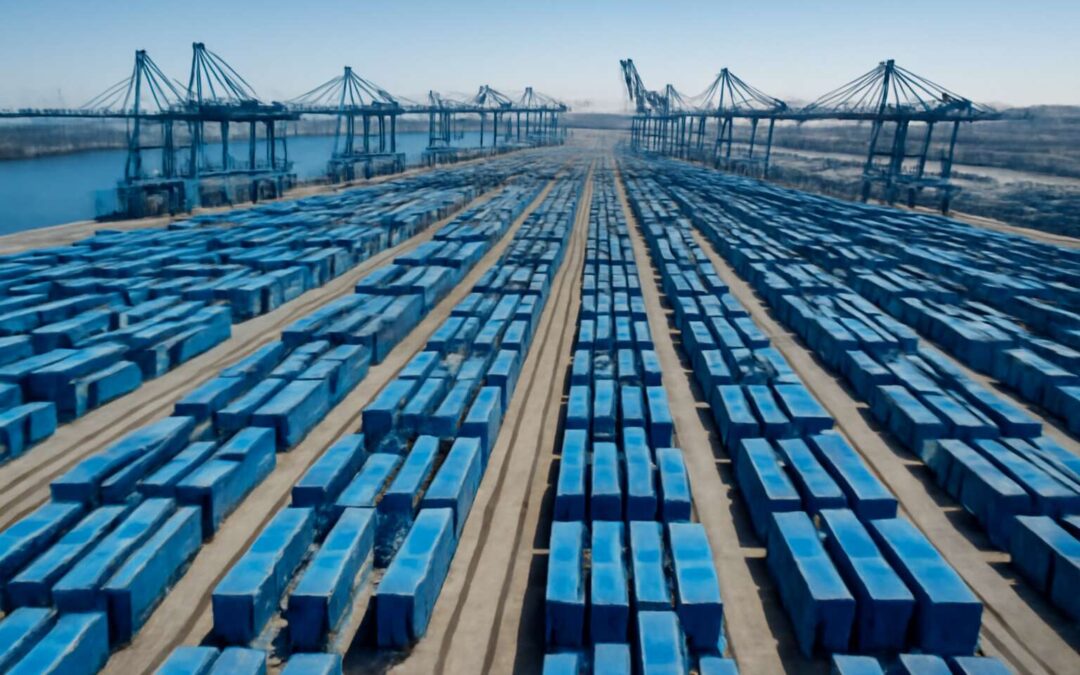
Global shipping container landscape
Global inventory and fleet size
Across South Africa’s ports and inland corridors, the rhythm of global trade keeps time with the tide. The provocative question how many shipping containers are there in the world shapes strategy—from port capacity to insurers’ risk models. That figure isn’t a novelty statistic; it mirrors supply chains, capital costs, and resilience.
Global inventory sits in the tens of millions of TEUs, and the active fleet hovers around the 40–50 million mark. Capacity swings with seasons and demand, shaping how ports from Durban to Cape Town handle workload. Here are a few touchstones that frame the landscape:
- Estimates put the global container fleet around 40–50 million TEUs
- The top operators—Maersk, MSC, CMA CGM—shape regional access and service levels
- Idle stock at key hubs influences Durban and Cape Town turnaround times
The mix is dynamic, and every port call adds another chapter to the SA container story. I see this play out.
Regional distribution and market leaders
Durban wakes up to the global heartbeat of trade, where the container yards hum like a well-oiled vending machine. That philosophical query how many shipping containers are there in the world isn’t trivia; it’s a proxy for capacity planning, capital cost, and resilience.
Regional distribution shows the map at work: Africa’s ports—Durban, Richards Bay, and Cape Town—rely on streamlined inland corridors to move cargo to inland depots and hinterlands. Idle stock at hubs can stretch or shrink turnaround times, a hidden dial that swings with seasonal demand and ship-routes.
Market leaders shape access and service levels across corridors from Asia to Europe to Africa.
- Maersk
- MSC
- CMA CGM
These operators aren’t just brand names; they’re the logistics weather in a region where every port call writes a new line in the SA container story.
Age, condition, and lifecycle
The global shipping container landscape wears age like a watermark on the tide—story told in steel and voyage. People often ask how many shipping containers are there in the world, and the answer hints at more than raw volume: a living archive of commerce.
Age and condition vary by climate and use, from pristine new builds to well-traveled veterans. Here’s a quick lifecycle snapshot:
- New build and early service
- Active deployment across doors of global trade
- Idle storage and last-mile transitions
- Refurbishment, reconditioning, and repurposing
- Recycling or end-of-life recovery
In South Africa, Durban’s yards hum with seasonal freight; the mix of containers reflects pragmatic choices: older boxes stay inland for storage, while newer ones reinforce regional programs and harsh coastal runs.
Impact factors and forecasting
In the global bloodstream of industry, steel boxes circulate with a quiet, relentless rhythm. A trade analyst once called the container the most portable business card in world commerce—a simple box with a world to carry! The story lies not in a single count, but in evolving cycles of demand, routes, and wear.
Impact factors and forecasting revolve around a few stubborn realities that bend the arc of the fleet.
- Shifts in global demand and trade routes
- Port efficiency and inland connectivity
- Refurbishment, recycling, and end-of-life recovery
Forecasting is a probabilistic map, not a single tally. People ask how many shipping containers are there in the world, and the answer unfolds from capacity, scrapping, and regional dynamics, with South Africa’s ports as a crucial node in the narrative.
Durban’s yards and Cape Town corridors echo the same truth: the container fleet mirrors commerce, yet steers possibility, scarcity, and price in equal measure!
