
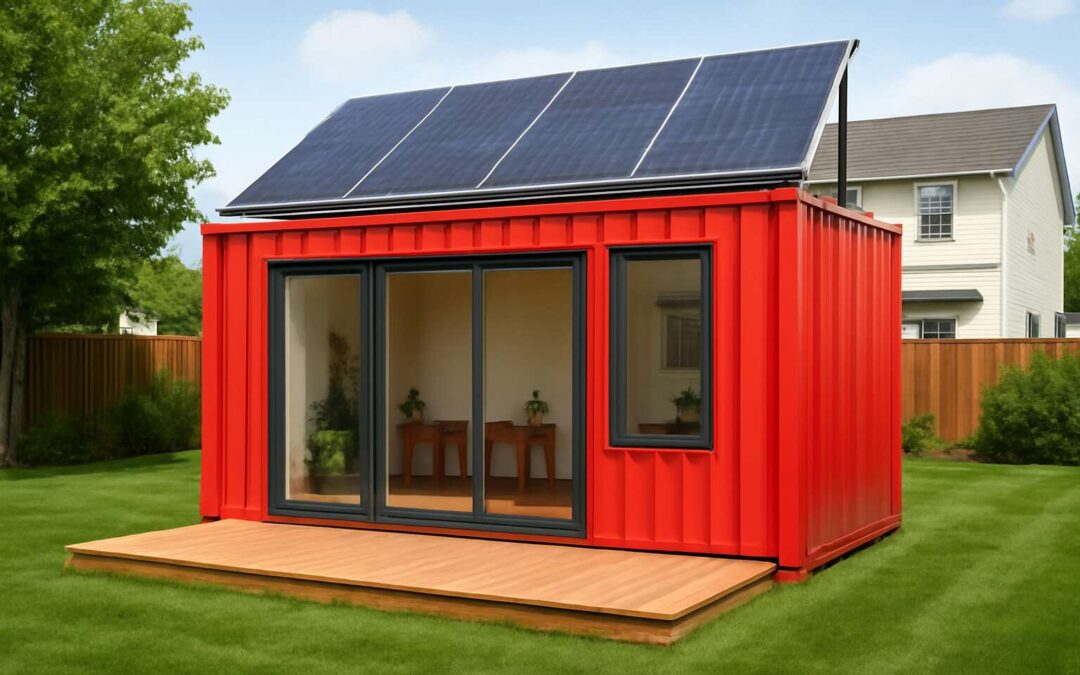
Overview of Containers on Residential Property
What qualifies a container for residential use
In South Africa, shipping containers on residential land have a way of writing their own dark, elegant stories in the suburbs. A flexible, affordable answer to space needs, they lure owners with promise and mystery, turning utilitarian steel into usable living, work, or studio spaces.
Overview of Containers on Residential Property shows that, to qualify for residential use, a container must meet safety, insulation, and permitting standards, with careful siting that respects drainage and setbacks. Essentials include weatherproofing, vents, secure access, and compliant electrical and plumbing connections.
- Structural integrity and foundations
- Insulation and moisture control
- Permitting and zoning compliance
- Electrical/plumbing safety
From a distance, these structures blend with the landscape, yet their magic rests in modular adaptability—silent, efficient, and unexpectedly resilient under South Africa’s changing skies. When properly planned, shipping containers on residential land offer living, work, or guest spaces while preserving the property’s character.
Typical use cases on homes and lots
Across South Africa’s sun-dappled suburbs, shipping containers on residential land carry a taut promise: space that expands without footprint, a bolt of possibility welded into weathered steel. They arrive as modular blocks that can become a sunlit studio, a quiet work-from-home nook, or a guest annex when the seasons shift. Their charm lies in how they blend with the landscape yet invite homeowners to rethink what a home can hold.
Typical use cases on homes and lots show a playful versatility that respects property lines. Consider: For many families, shipping containers on residential land become a welcoming extension rather than an afterthought.
- Home office or study
- Guest suite or studio apartment
- Art, design, or music studio
- Workshop, gym, or hobby space
- Storage with a finished, climate-controlled touch
Key terms and definitions
Space is the new square metre—one steel container can reshape a yard without shrinking the house. Across South Africa, homeowners report up to a 25% increase in usable space when thoughtfully integrating shipping containers on residential land; you feel the difference the moment light meets a refined edge.
Here are the essential terms that translate design dreams into a workable plan:
- Container: a standard ISO steel module repurposed with insulation and finishes for living space.
- Base and substructure: the platform and foundations that ensure level, durable support in varied soils.
- Zoning and permits: the regulatory framework governing placement, setbacks, and intended use on residential property.
- Finishes and climate control: interior treatments, HVAC, and insulation that convert metal shells into inhabitable rooms.
A careful choice of materials and detailing keeps the project legible and respectful of the landscape.
Cost ranges and ROI expectations
Across South Africa, homes that weave containers into their landscape gain up to 25% more usable space, a hook that makes space feel like light itself! For shipping containers on residential land, budgets typically swing from around R150k for a bare shell to about R600k for a refined, climate-controlled haven—depending on insulation, finishes, and foundations. The payoff is measured in more than square footage: enhanced property value, adaptable living zones, and the potential for extra rental income, often visible within a few seasons as buyers glimpse the added footprint.
- Upfront costs: container purchase, transport, base, and basic insulation
- Ongoing costs: climate control, finishes, energy efficiency, and maintenance
- ROI drivers: expanded living space, rental income potential, and curb appeal
Zoning, Permits, and Legal Considerations for Residential Containers
Local zoning rules and setback requirements
Dreams parked on a quiet street collide with a quiet truth: zoning, permits, and legal guardrails shape what you can build. In South Africa, the path for shipping containers on residential land is navigated with care, clarity, and a reverence for place. “Permits are the map,” a craftsman reminds us.
To stay in harmony with rules rather than wrestle them, consider these compass points:
- Zoning compatibility and required setbacks for container placement
- Permitting timelines, approvals, and the role of the municipal building department
- Legal liabilities, covenants, and homeowner association expectations
When the lines on a plan align with local bylaws, the story can unfold with grace and intention. The law protects both property and passion, letting this home-material narrative breathe instead of fight.
Permits and approval processes
“Permits are the map,” a craftsman reminds us. In South Africa, zoning compatibility decides where shipping containers on residential land can sit and how far they must stand from property lines. Municipal rules differ by township, but the cadence is the same: plan, document, and respect the guardrails that protect streets, neighbours, and the character of a place.
Legal considerations sit at the line between property and policy. A container without approvals can trigger fines, removal orders, or lender headaches. Covenants and HOA expectations can tighten the frame more than zoning alone.
Elements to review include:
- Zoning category and setback requirements for your parcel
- Permit requirements and the approvals timeline with your local municipality
- Covenants, conditions, and HOA expectations
- Inspection milestones and final compliance checks
HOA and neighborhood restrictions
“Permits are the gate; ignore them and your project becomes a lawn ornament,” a planner once quipped. In South Africa, zoning and land-use classifications decide whether shipping containers on residential land can sit at all, and how far from property lines they must stand. HOA and neighborhood rules can tighten the frame, even with municipal approval. The aim is practical: protect streetscapes and property values while letting homeowners use space sensibly.
For shipping containers on residential land, a concise checklist helps.
- Documentation: zoning clearances and HOA approvals
- Appearance guidelines and screening
- Inspections and final compliance
Balancing these asks keeps the project out of headlines and aligned with the street’s character. With proper alignment, shipping containers on residential land become a practical addition, not a flash point in the cul-de-sac.
Building codes and safety standards
Permits are the gatekeeper; skip them and the dream becomes a lawn ornament. In South Africa, zoning and land-use classifications decide whether shipping containers on residential land can sit at all and how far from property lines they must stand.
Zoning, the National Building Regulations, and SANS 10400 set safety and placement baselines. They shape setbacks, height, and fire resistance, ensuring a clean streetscape and predictable neighbour relations.
- Zoning classification and permissible uses
- Setback, height, and screening requirements
- Fire safety and structural standards per building codes
Permitting follows a clear path: planning permission and building plan approvals from the municipality, followed by on-site inspections before sign-off.
Legal considerations include title covenants and neighbour consents where relevant, plus utilities compliance and adherence to local by-laws that govern appearance and anchoring.
Insurance implications and liability coverage
Zoning and permit realities bite at the first dawn of a plan for residential containers. In South Africa, insurance policies watch the line between lawful use and a quiet trespass, where shade, fire risk, and property damage become real liabilities. Zoning dictates whether a container may sit on a plot and how far from boundaries it must stand. Building plans and on-site inspections seal the deal before any work begins.
- Liability coverage: protect neighbours and passers-by from injury or damage.
- Property damage: extend or obtain coverage for the container and its contents.
- Compliance and endorsements: ensure documented inspections, anchoring, and fire safety.
Shipping containers on residential land demand clear insurance endorsements and liability coverage to guard homeowners and neighbours. Permits and legal requirements frame the envelope of risk, while insurers price the risk with care.
Design, Placement, and Aesthetic Integration
Site planning and foundations
Space is memory made visible, as a Cape Town architect often says, and South African yards crave design that honors sun, wind, and view. When evaluating shipping containers on residential land, the design should fuse rugged steel with warmth, light, and air—turning the container into a living, breathing extension of the home. The aim is volumes that feel inviting, a sense of place, and textures that let the landscape speak through form.
Placement into the site hinges on orientation, microclimate, and privacy. A careful footprint can maximize outdoor living while maintaining graceful links to the main dwelling.
- Orientation to sun and breezes
- Drainage and flood risk awareness
- Access from street and garden
- Future expansion compatibility
Aesthetic integration and foundations bind the container to the land. Choose finishes that harmonize with existing materials, and foundations that respect soil, drainage, and grade. When artfully integrated, shipping containers on residential land become quiet storytellers of place.
Layout options and stacking configurations
Design is a dialogue between rugged steel and waking light; shipping containers on residential land become living extensions when volumes breathe with the site—sun-dappled courtyards, whispering breezes, and a warmth that feels both measured and magical.
- Single-volume cottage on a plinth for compact urban lots
- Two containers stacked with a slender deck linking living areas
- L-shaped cluster around a sheltered courtyard for passive shading
Placement hinges on sun, wind, and privacy. Orient for breezes, plan drainage with grace, and imagine how people will flow from street to garden while the main dwelling remains the heart.
Finish choices should harmonize with existing materials—cedar, stone, or plaster—and textures that catch the light without shouting. When anchored with thoughtful foundations, the container becomes a quiet storyteller of place, a breath of wind and steel in tune with the landscape.
Energy efficiency, ventilation, and climate control
Design is a dialogue between rugged steel and waking light, and nowhere is that dialogue more honest than on shipping containers on residential land. In South Africa, homes lose up to 40% of energy through envelope gaps; volumes breathe with the site—sunlit courtyards, whispering breezes, and a warmth that feels both measured and magical.
Placement hinges on sun, wind, and privacy. Orient for breezes, plan drainage with grace, and imagine how people will flow from street to garden while the main dwelling remains the heart.
Energy efficiency, ventilation, and climate control are not afterthoughts; they are design intelligence. In South Africa’s variable climate, airtight detailing, roof and wall insulation, and deliberately planned openings let breezes cool spaces, while thermal mass moderates heat gain and reduces energy demand.
- Cross-ventilation and operable openings for natural cooling
- Thermal mass and high-performance insulation to stabilize temperatures
- Passive shading and strategic site placement to minimize energy use
Exterior finishes, colors, and curb appeal
South Africa’s curb appeal flirtations with steel and sun. A shipping container on residential land can read as architecture, not hardware. “Steel wears its character,” a local designer says, and this piece wears color, texture, and light with quiet wit.
Design and placement wake up around finishes and palette. Exterior finishes, colors, and curb appeal set the first impression while nodding to sun, shade, and the rhythm of the street. Shipping containers on residential land should feel inevitable, not gimmickry, a respectful scale beside gardens.
- Corten patina with natural weathering
- Warm timber or bamboo cladding
- Neutral base tones with bold accent colors
Scale and texture draw the eye to the landscape; the container becomes a hinge between street and garden, catching light at dawn and dusk.
Landscaping for privacy and integration with yard
From the curb to the garden, design makes or breaks the idea of shipping containers on residential land. In my experience, these steel volumes read as sculpture when placed with intention, catching dawn light and weaving with shade by noon. In South Africa, the sun can be merciless, so placement must respect microclimates and winds. The right placement respects scale beside trees and hedges, turning steel into neighborhood fabric rather than a foreign object. The view should shift with the day’s rhythm, speaking softly and elegantly!
- Layered planting and privacy screens that soften edges and mask utility zones
- Site-aware orientation to capture sun while preserving sightlines to the yard
- Texture and color harmonies that tie the container to garden palettes
Done well, the container becomes a hinge between street and garden, a quiet stage where light meets shade, and where the landscape narrates the home’s ambition without shouting.
Practical Applications and Case Studies
Accessory dwelling units and detached studios
In South Africa’s evolving suburbs, space is not just a constraint—it’s a canvas. The use of shipping containers on residential land can unlock new ways to live, work, and host guests, especially when crafted with purpose and care.
Practical applications and case studies show how accessory dwelling units and detached studios transform yards into flexible, value-adding spaces. From a home office on the edge of Cape Town to a guest wing beside a family home in Gauteng, these containers offer privacy, speed, and charm. Across urban cores and towns, shipping containers on residential land prove adaptable, resilient, and stylish.
- Accessory dwelling unit that supports multi-generational living
- Detached studio used for remote work or creative pursuits
- Scaled-down rental suite that adds income without expanding the footprint
Such projects balance aesthetic appeal with practical resilience, weaving container architecture into South Africa’s residential landscape while respecting local constraints and community sensibilities.
Home office and workshop configurations
In South Africa’s evolving suburbs, a single steel module can reshape a yard. shipping containers on residential land are reshaping how we work, play, and welcome guests.
From a Cape Town edge to Gauteng’s bustling corridors, practical configurations prove these units can serve as crisp home offices or compact workshops. They arrive with privacy, sound dampening, and finishes that blend with the garden rather than overpower it. For many homeowners, shipping containers on residential land offer speed, privacy, and charm.
- Home office pod with climate control, daylighting, and integrated storage
- Detached workshop for crafts, recording, or remote consulting
- Scaled-down rental suite that adds income without expanding the footprint
Across the country, these projects fuse aesthetic flair with resilient design, turning yards into flexible, value-adding spaces that feel unmistakably South African.
Storage and multi-use space conversions
Practical applications for storage and multi-use space conversions are reshaping the garden landscape. In South Africa, shipping containers on residential land are not merely storage; they become weatherproof hubs for hobbyists, remote collaborators, and weekend hosts. From Cape Town’s leafy suburbs to Gauteng’s fast lanes, these steel modules prove that a yard can grow a new heartbeat in a weekend.
- A compact, weather-sealed bike shed with modular shelving and integrated charging for tools and devices.
- A sound-damped pop-up studio for small-group sessions, remote consulting, and musical practice with daylighting and ventilation.
- A modular storage annex that houses seasonal gear while keeping a tidy, fold-away work surface for quick projects.
Finishes, privacy, and adaptable layouts are what tie these projects together. When placed with thoughtful site planning, they add value without overpowering the yard’s natural rhythm, turning ordinary corners into flexible spaces that feel unmistakably South African.
Maintenance considerations and lifecycle expectations
Shipping containers on residential land are reshaping South Africa’s backyards. In many homes they’re not just bins for gear but weatherproof hubs for hobbyists and small teams. A compact bike shed, a sound-damped studio, or a modular storage annex can emerge in a weekend, turning overlooked corners into usable spaces that respect the yard’s rhythm. “Small boxes, big changes” rings true here.
Maintenance considerations and lifecycle expectations shape every project.
- Corrosion and coating refresh cycles in coastal SA and inland heat
- Ventilation and insulation performance over time
- Foundation settlement checks and load-bearing reassessment
- Access, security, and seal integrity after heavy weather
Over a typical 25–40 year lifecycle, these units benefit from periodic paint refreshes and mindful repurposing as family needs shift, keeping them aligned with SA climate and your garden’s tempo.
Real-world cost breakdowns and timelines
Across South Africa, a six-metre shipping container can morph into a sunlit studio, a compact workshop, or a guest annex in a weekend. Practical applications unfold like a treasure map, revealing how sturdy steel harmonises with our climate and yard cadence. shipping containers on residential land are reshaping backyards, turning overlooked corners into flexible spaces that echo the house’s rhythm and the dreamer’s spark.
Case studies and cost breakdowns illuminate the journey: a typical setup in coastal suburbs might land between R180k and R260k, including delivery, foundations, and basic finishes, while a 4–6 week timeline from crate to ready space is common, with an additional week for interior fit-out. These numbers show how swiftly a new living or working space can become part of the home’s everyday tempo.
Financing, Maintenance, and Long-Term Value
Financing options, grants, and incentives
Financing, maintenance, and long-term value come into focus with shipping containers on residential land. In South Africa, homeowners are discovering options that cut upfront costs and unlock extra living or workspaces. Talk with lenders about personal loans or home-improvement lines—paths to transform space. Grants and incentives from municipalities can trim conversion costs and speed approvals for energy- and water-efficient installations related to shipping containers on residential land.
- Municipal rebates for conversions
- Green financing options from banks
- Tax incentives or depreciation for energy upgrades
Maintenance stays predictable with routine inspections, sealant upkeep, repainting, and pest control. When well cared for, shipping containers on residential land can add long-term value to a property, offering flexible space that adapts to life’s next chapter.
Durable materials, warranties, and maintenance schedules
Shipping containers on residential land have become practical, not just novel, space solutions. A strong hook from a SA designer: “they’re scalable infrastructure.” Financing options—personal loans or home-improvement lines—help spread the cost, and municipal rebates can trim upfront spend while expediting approvals for energy- and water-efficient conversions.
Durable materials and clear warranties turn a project into lasting value. Opt for coated steel with proper insulation and ventilation to stand up to South Africa’s climate. Warranties typically cover structural integrity and waterproofing for a decade or more, giving homeowners confidence to plan long-term use.
- Durable materials and corrosion-resistant finishes
- Warranties covering structure and waterproofing
- Maintenance schedule: inspections, sealants, repainting
Maintenance stays predictable with routine inspections, sealant upkeep, repainting, and pest control. A simple cadence—annual roof and seal checks, sealant reapplication every 2–3 years, repainting every 5–7 years—keeps the space sound and its value rising as life changes.
Impact on resale value and marketability
“they’re scalable infrastructure.” In the SA housing scene, financing for shipping containers on residential land is increasingly viewed as a way to unlock flexible living spaces without locking away capital. Light-touch incentives—rebates for energy upgrades and efficient design—help balance the ledger as buyers look for value and speed.
Maintenance becomes a selling point, not a burden. A simple, predictable rhythm—check for leaks after rain, recoat weathered exterior every few years, and stay on top of pest control—keeps the space feeling fresh and ready for life changes. That reliability translates to quieter resale conversations!
Long-term value hinges on how the project ages with the site. When structural integrity remains sound and finishes stay cohesive with the yard, marketability rises. Buyers respond to a container-enabled home that reads as integrated and future-ready.
- Structural reliability and warranties
- Low-maintenance systems and materials
- Energy efficiency and curb appeal
Tax considerations and depreciation
In SA, flexible financing reshapes shipping containers on residential land, and buyers are moving in weeks—not months. Capital stays accessible, and lenders offer staged draws that align with build milestones, cutting time to occupancy.
Maintenance becomes a selling point. A simple rhythm—check leaks after rain, refresh exterior every few years, and curb pests—keeps the space fresh and ready for life changes.
- Seasonal inspections for leaks and rust
- Repainting or cladding refresh every 3–5 years
- Pest and moisture control measures
Long-term value follows how it ages with the site. If structure holds and finishes sit well with the yard, market appeal grows. Tax considerations and depreciation shape the financial horizon.
Risk management, insurance, and safety planning
In SA, buyers move in weeks—not months, and shipping containers on residential land are part of the rush. Financing here hinges on flexibility: staged draws tied to milestones keep funds flowing without delay. It’s about progress, not prestige.
Maintenance becomes a quiet selling point. A simple rhythm—check leaks after rain, refresh exterior every 3–5 years, curb pests—keeps the space looking fresh for life changes.
Long-term value rests on aging gracefully with the yard. Pair sensible risk management with steady insurance and safety planning—foundations, drainage, and compliant practices convert resilience into lasting market appeal.
