
Mediterranean Shipping Company Depots – Ambrose Park is a Container terminal establishment in Durban, KwaZulu-Natal, South Africa
KwaZulu-Natal
South Africa
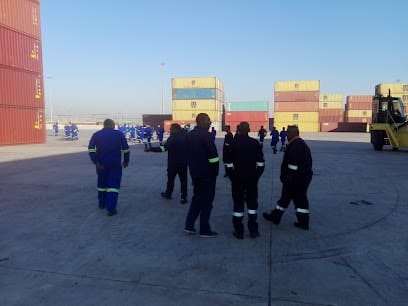
Sorry, no records were found. Please adjust your search criteria and try again.
Sorry, unable to load the Maps API.
Container Terminal Services in Durban, KwaZulu-Natal
Durban, a major maritime hub on the eastern coast of South Africa, offers a range of container terminal services that support both regional and international trade. Operated within the port precincts of KwaZulu-Natal, these facilities are designed to handle the movement of containerised cargo efficiently, providing an essential link between ships, inland transport, and distribution networks. The services are typically organised to accommodate inbound, outbound, and transhipment cargo, with attention to cargo integrity, safety, and regulatory requirements.
At the heart of container terminal operations is the process of unloading and loading cargo from ships. Trained stevedoring teams move containers between vessels and yard spaces, utilising handling equipment such as gantry cranes, reach stackers, and specialised forklifts. Once containers are on the quay or in the yard, they are tracked through automated or manual systems that monitor position, status, and detention times. This tracking supports efficient yard management and helps customers plan onward transport or storage needs.
Following arrival, containers may undergo inspection and clearance procedures that involve customs and other regulatory bodies. Depending on the cargo, facilities may offer documentation handling, verification of bill of lading, manifests, and related paperwork. In many cases, the terminal collaborates with freight forwarders, shipping lines, and depot operators to coordinate the transfer of goods from the terminal to rail or road networks. This coordination is crucial for meeting delivery windows and reducing dwell times within the port environment.
Refrigerated containers, or reefers, represent a specialised service line within Durban’s container terminals. Reefers require continuous power supply, temperature monitoring, and appropriate discharge procedures to ensure cargo integrity. Terminal operators may provide dedicated reefer points, cooling systems, and contingency plans for power interruptions. For non-refrigerated cargo, standard container handling and secure locking practices are emphasised to protect goods against theft, weather exposure, and damage during transfer.
Beyond basic handling, the term services extend to container storage and depots. Empty container parks and kept containers are located within the terminal or nearby facilities, ready for reloading or redistribution. Customer needs often include placing containers in specific stacks or locations to optimise later movements, especially when planning inland transport via rail or road corridors that connect Durban to other economic centres in the country.
Practical considerations for customers include peak-period demand, weather conditions affecting port productivity, and the availability of chassis and other handling equipment. Access to the port area, security controls, and adherence to safety standards are important factors for shippers and consignees alike. Proximity to rail links and road networks enhances the ability to move goods promptly to inland destinations such as Gauteng and beyond, influencing overall supply chain timing and costs.
Typical engagements with container terminal services involve a sequence of steps: arrival on a ship; lifting and transfer to yard; documentation and clearance procedures; loading onto or off freight modes for onward movement; and eventual delivery to customers or consolidation points. While the exact platforms and IT systems vary by operator, the underlying principle remains the same: to provide a reliable, observable, and secure environment where containerised cargo can be managed from berthing to final destination. For users in KwaZulu-Natal and neighbouring regions, Durban’s container terminals offer critical capacity to support export-oriented industries, manufacturing supply chains, and regional distribution networks.
- Container handling and unloading/loading
- Reefer container support and monitoring
- Storage in yard and empty container parks
- Documentation support and regulatory liaison
- Inland transport coordination via road and rail links