
Excess Storage is a Self-storage facility establishment in Gqeberha, Eastern Cape, South Africa
Excess Storage: Self-storage solutions in North End, Port Elizabeth
Excess Storage operates as a micro-storage facility in the North End district of Port Elizabeth (Gqeberha), offering compact, purpose-built storage units designed to be affordable, convenient and secure for households and small businesses. The service emphasises flexible, short-term occupancy with scalable options, making it suitable for moves, renovations, downsizing and decluttering, as well as temporary storage needs for offices, stock, tools or equipment. The offering positions itself as an accessible option within easy reach of central business districts, with a focus on simplicity and straightforward access for customers.
Two primary customer groups are catered for: household storage and business storage. Household micro-storage units are pitched as suitable for furniture, personal keepsakes, tools and miscellaneous household items. Business storage is framed as a practical space-saving solution for paperwork, furniture, tools and stock, with the ability to adjust storage arrangements as business needs evolve. Both categories stress security as a core priority, highlighting ownership of the lock by the customer and access to the unit via a personal padlock, combined with access control, CCTV monitoring and guarding.
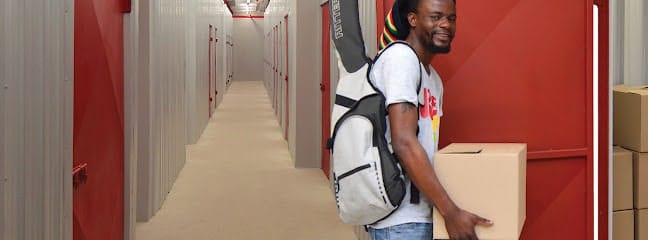
The facility describes a user-friendly process for gaining access to a unit. Prospective customers typically begin by discussing requirements and reserving a unit either by telephone or by visiting the site at Pier 14 Shopping Centre (2nd Floor). Access to the storage area is facilitated by driving up a ramp from the Lavinia Street entrance behind the centre, checking in at reception, completing paperwork and receiving an entry tag. Free loading trolleys are available to assist with moving items, and customers are asked to supply their own padlock, although padlocks can be purchased on site if needed. Units are designed to be entered at the customer’s discretion, with the expectation of self-managed access during stated hours.
Standard operational details emphasise security and accessibility. The site operates weekdays from 08:00 to 18:00, with shorter hours on Saturdays and public holidays (08:00–12:00) and occasional closures on Sundays. 24/7 CCTV monitoring and guarding are cited as ongoing security measures, and modern access control systems are referenced to ensure that only authorised individuals can reach stored items. The units are described as being lockable with the customer’s own padlock, ensuring possession of stored goods remains with the customer.
There is an emphasis on ease and speed of intake. In many cases, customers can move in on the same day by selecting an appropriate unit size, bringing one month’s deposit, proof of identity and address, and a padlock. The FAQ section notes the option to upsize or add units with one month’s notice, and confirms a minimum initial commitment of one month, with no long-term contract required. Payments are typically made by electronic funds transfer (EFT) or direct deposit, with rent due on the first day of each month after the initial occupancy.
Reviews from visitors provide a mixed but generally positive lens on the customer experience. Several reviewers commend the security features, the cleanliness and the straightforward access to storage units, and many express appreciation for approachable staff. A recurring theme in comments is the impact of office hours on customer convenience, with some noting that extended hours would improve accessibility for clients with off-peak requirements or access tags. Specific mentions of the staff being helpful and professional appear in several reviews, alongside a few concerns about administration or responses during busy periods. A number of reviewers highlight the value proposition in terms of price and space, with opinions varying on the overall service experience and administrative smoothness.
Practical tips for potential customers include confirming the exact unit size needed, bringing a valid ID and proof of address, and ensuring the padlock is ready before move-in. Prospective tenants should bear in mind the need for one month’s written notice to move out and the absence of long-term commitment. While the facility offers free trolleys and an accessible loading area, customers are advised to account for peak times when moving heavy items. It is also prudent to review the terms of the lease before signing, particularly the clause about notice periods and any potential administration requirements. For best access, plan visits during the posted weekday window (08:00–18:00) and note that Saturdays offer shorter hours, with Sundays closed.
Excess Storage serves primarily the Port Elizabeth area, positioning itself as a central, managable micro-storage option within the Pier 14 complex. The site provides clear contact details, including a telephone line and an email address for enquiries, with a street-level entrance behind Pier 14 for easy vehicle access to the loading areas. As a division of GRITPROP INVESTMENT HOLDINGS (PTY) LTD, the operation aligns itself with a dedicated storage service supported by on-site staff and security measures intended to protect stored assets.
Gqeberha
Eastern Cape
South Africa
Sorry, no records were found. Please adjust your search criteria and try again.
Sorry, unable to load the Maps API.
Self-storage Facility Services in Gqeberha, Eastern Cape
Self-storage facilities in Gqeberha (Port Elizabeth) offer a range of practical solutions for individuals and businesses seeking additional space in the Eastern Cape. These centres are designed to accommodate household items, business stock, seasonal equipment, and renovation belongings with a focus on safe, convenient access and flexible tenancy terms. The environment is typically clean, well-lit, and monitored, with operations tailored to the needs of a city that blends urban activity with coastal logistics.
Standard offerings commonly include a variety of unit sizes, from compact lockers to larger rooms suitable for compact pallets or domestic furniture. Customers can choose between drive-up access units for easy loading and unloading, or individual storage rooms located within a secure building. As a general rule, units are rented on a short- or long-term basis, providing the option to scale storage space in response to changing circumstances such as relocations, renovations, or business cycles.
Security is a central consideration for self-storage facilities in this region. Facilities typically invest in perimeter fencing, gated entry with controlled access, CCTV surveillance, and on-site personnel or security patrols. Individual units may offer robust door hardware and reinforced walls. It is common for centres to require a sign-in process for visitors, supplemented by standard terms that clarify liability and access rules. Insurance for stored items is often encouraged or required, with customers advised to verify coverage for their specific belongings either through existing policies or through optional policies offered at the facility.
Access arrangements are designed to balance convenience with security. Opening hours generally provide daytime access with extended hours during busier periods, and some sites offer 24/7 access for authorised customers. Access is typically granted via a secure system, such as personalised codes or key fobs, with visitors required to present identification. Prior to moving belongings, customers may be asked to complete a rental agreement, provide emergency contact details, and acknowledge any weight or height restrictions for certain corridors or lift access if applicable.
Practical considerations extend to packing and handling. Many facilities sell or rent typical moving supplies, including sturdy boxes, bubble wrap, tape, and protective covers. The availability of pallet racking or trolleys can streamline the process for businesses with larger quantities of stock. While staff are generally not responsible for loading or unloading unless a dedicated removals service is engaged, sites commonly provide guidance on best practices for organisation, such as labelling systems and inventory checks to help track items efficiently.
Business customers may benefit from flexible storage arrangements that accommodate seasonal stock, archives, or project materials. Some centres offer unit partitions or adaptable layouts to optimise space utilisation. For those handling sensitive documents or valuable equipment, climate considerations and humidity control may be relevant; however, climate-controlled units are not universal and depend on local facility specifications. Prospective tenants are encouraged to review terms regarding access rights, insurance requirements, and the steps required to vacate a unit without penalty when the tenancy concludes.
- Range of unit sizes and drive-up or interior access
- Robust security measures and monitored environments
- Flexible rental terms and straightforward move-in procedures
- Accessibility through controlled entry and organised loading areas
- Supportive packing supplies and practical guidance for storage efficiency
Overall, self-storage facilities in Gqeberha provide modular space solutions designed to suit both private households and local enterprises. By prioritising security, accessibility, and practical support, these centres help customers manage space pressures in a bustling Eastern Cape city.