
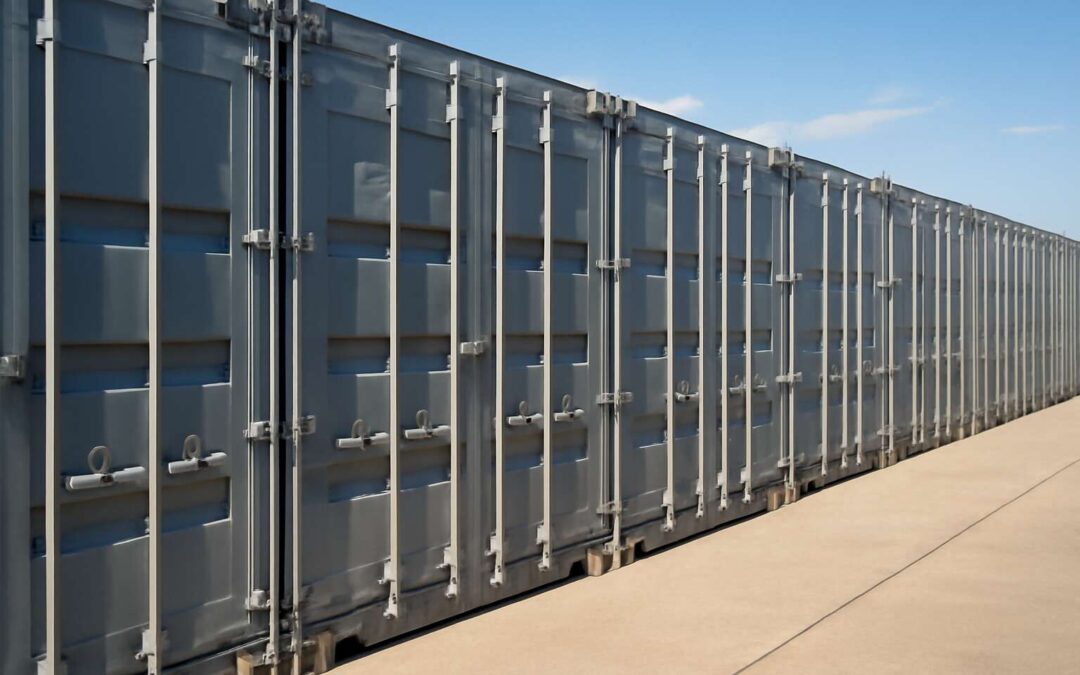
Overview of Shipping Containers with Multiple Doors
What are multi-door containers and why they matter
South Africa faces growing demand for flexible, secure storage on busy sites. Storage demand is up 28% at ports and distribution hubs, and shipping containers with multiple doors answer that need with practical access and quick reconfiguration. These containers turn a single box into a workspace, a staging area, or a weatherproof vault for tools and inventory. The multiple doors improve circulation, letting workers reach different bays without shifting loads, cutting damage and delays!
These systems are well suited to South African sites, where segmented bays and modular layouts adapt to fluctuating stock and tight footprints. For South Africa, shipping containers with multiple doors offer on-site flexibility that scales with demand.
- Efficient access for staged loads
- Enhanced security with separate compartments
- Modular layouts that shrink footprint
- Durable, weather-resistant design suited to SA climate
Key design features enabling multiple access points
On busy South African sites, every door is a decision that echoes through the day’s workflow. The right access points reduce idle travel and little frictions, turning a simple container into a confident, on-site partner.
Key design features enabling multiple access points for quick, independent work streams include:
- Multiple entry points along the length for parallel loading and unloading
- Independent compartments with secure, weather-tight seals
- Modular panels and doors that allow rapid reconfiguration on site
- Rugged hardware designed for SA climate—corrosion-resistant hinges and seals
These systems are crafted to respect space constraints while keeping tools and inventory accessible. Shipping containers with multiple doors offer on-site flexibility that scales with demand, turning a single footprint into a dynamic workspace, staging area, or weatherproof vault for tools and inventory.
Common configurations: end doors, side doors, and hybrid layouts
On South African sites, throughput is the heartbeat of the day. A recent logistics snapshot shows facilities cutting idle travel by up to 25 percent when access points are optimized. With shipping containers with multiple doors, space seems to breathe—letting crews move in parallel and keep tools within arm’s reach. Doors become routes through which a day’s tasks travel, and I’ve seen bottlenecks melt into momentum.
Common configurations tailor the unit to the task at hand:
- End doors: quick corner access
- Side doors: parallel loading corridors
- Hybrid layouts: flexible, blended entries
These layouts respect compact footprints while inviting tools and inventory to mingle where needed. shipping containers with multiple doors offer on-site flexibility that grows with demand, turning a single footprint into a living workspace.
How multi-door setups improve workflow and space utilization
South African facilities are seeing throughput gains of up to 25% when access points are optimized. In this climate, shipping containers with multiple doors become quiet engines—spaces where movement chases efficiency and every inch of space earns its keep.
An overview of these setups reveals how shipping containers with multiple doors transform flow. With deliberate placement, crews can pivot between tasks without crossing paths, so parallel work streams flourish and idle trips disappear. The result is a more generous footprint that adapts as demand shifts.
Key advantages include:
- Parallel loading and access points reduce bottlenecks
- Maximized footprint supports more inventory and tools
- Flexible layouts scale with demand
A final thought on practical scale and usability across SA sites: these containers invite crews to move with confidence, turning a single footprint into a responsive workspace.
Applications and Use Cases for Multi-Door Containers
Warehousing, distribution, and inventory management
“The warehouse is a nervous system, and doors are its lungs,” a veteran SA logistics manager once told me. In practice, shipping containers with multiple doors reshape how stock moves, turning claustrophobic aisles into calculated flows and revealing a surprising order beneath the chaos.
For warehousing and distribution, these containers enable zone-based access, faster picking, and cleaner segregation of SKU families. I see it in the floor plans; the result is less cross-picking, fewer double-handlings, and better accuracy on inventory counts, which matters in SA’s diverse retail landscape!
- Cross-docking with direct-to-transport for time-critical orders
- Batch picking and put-away by zone to reduce travel
- Temporary storage for seasonal SKUs with easy reconfiguration
These use cases, when aligned with robust data capture and clear labeling, unlock predictable throughput and leaner warehouses across South Africa’s ports and inland hubs.
Retail, pop-up stores, and on-site commerce
“Doors shape the rhythm of a store,” a seasoned SA logistics manager once observed. In South Africa’s bustling retail corridors and event spaces, that rhythm becomes a strategic advantage when spaces are temporary and budgets tight. shipping containers with multiple doors unlock configurations that feel fresh and purposeful, even in a crowded market.
For retail pop-ups, the containers can be divided into front-of-house showcases, storage, and checkout lanes, letting brands choreograph flow without reclaiming precious space. For on-site commerce at markets or festivals, the flexible doors support rapid re-stocking and clean separations by SKU families, keeping lines short and experiences nimble.
- Brand pop-ups and experiential retail that travel between cities with minimal setup
- On-site commerce hubs at markets, stadiums, and tourism hotspots to shorten stock cycles
- Temporary retail and training spaces for remote sites, like mining camps or construction zones
Mobile offices, workshops, and on-site facilities
One door opened, and the schedule realigns itself. Across South Africa’s sun-burnished landscapes, shipping containers with multiple doors unlock a choreography of mobile offices, workshops, and on-site facilities that stay sharp even when space is scarce. They become quiet architects of expediency, turning empty yards into functioning crossroads where people and processes move with a shadowed grace.
Within this logic, four enduring use cases emerge, each designed to keep lines short, stock secure, and momentum intact:
- Mobile offices for remote sites such as mining camps, festival grounds, or township developments
- On-site workshops for rapid repairs, fabrication, and equipment maintenance
- Temporary training hubs that host safety briefings and skills programmes
- Site administration and stock rooms that streamline restocking and reporting
These configurations transform workdays into a disciplined ritual, where doors frame the workflow and every footstep finds purpose in the cadence of a well-orchestrated operation.
Emergency response and disaster relief setups
In crises, speed becomes a lifeline. Across South Africa’s sun-scorched and rain-washed landscapes, shipping containers with multiple doors offer instant, modular zones for relief work. I’ve watched teams carve out triage, storage, and a command space from a single unit in hours. The result is a mobile, weather-hardened shelter that travels light and deploys fast.
Core use cases translate into real relief on the ground:
- Field medical clinics and triage hubs
- Relief supply depots with safe storage and cold-chain capabilities
- Mobile command posts and coordination centers
- Decontamination bays and wash stations
From remote mining camps to flood-affected townships, these configurations keep lines clear, patients treated, and supplies secured, restoring order when chaos speaks loudest.
Cold storage and climate-controlled configurations
In crisis zones, speed is a lifeline, and modular thinking is a weapon. Studies show relief operations accelerate when using shipping containers with multiple doors, slashing setup times and expanding on-the-ground reach.
Cold storage and climate-controlled configurations inside these units safeguard vaccines, medicines, and perishables. With multi-door configurations, cold zones stay at 2-8°C for vaccines and 0-4°C for other items, even as heat sweeps the exterior.
In practice, they serve as temporary labs, field testing stations, and portable clean rooms—configurations that respect space, power, and noise limits while expanding capacity where it’s needed most.
From remote mines to flood plains, the design allows rapid reconfiguration: doors placed end-to-end or along the sides frame distinct climates and utilities without sacrificing flow.
Cost, Durability, and Compliance of Multi-Door Containers
Durability under heavy use and harsh environments
Cost: In the realm of logistics finance, the price tag on shipping containers with multiple doors tells a story. Upfront CAPEX is higher for multi-door layouts, but the long-term efficiency—less movement, faster access—shaves operating costs and reduces labor time. In a market like South Africa, where uptime matters, value is measured by total cost of ownership rather than sticker price.
Durability: Built to endure the grind of heavy use and harsh environments, these containers embrace steel sinew, corrosion-resistant coatings, and reinforced door frames. The deterrent to rust is a vigilant design—double seals, yawning gaskets, and resilient hinges—that keeps weather and wear at bay as crews move through shifts and seasons. Shipping containers with multiple doors stand up to dust, heat, and maritime air with a stubborn grace.
- Corrosion-resistant steel
- Reinforced door frames
- Double sealing gaskets
Compliance: Standards are not mere paperwork but a shield for safety and liability. Multi-door configurations meet ISO and local South African regulatory requirements, while fire-rating and ventilation considerations are integrated into the build. Inspections are straightforward, documentation is clear, and the design remains auditable through audits and site checks.
Shipping, loading, and safety compliance (ISO/CIFFA)
Cost, in the logistics jungle, is a tale told in CAPEX and ROI charts. Shipping containers with multiple doors demand a higher upfront investment, but in SA uptime is currency—and total cost of ownership beats sticker price. I’ve seen loading times shrink and labor hours melt away when access points snap into action!
Durability here means more than a shiny shell. These units wear a steel backbone and protective finishes that shrug off dust, heat, and maritime air. Fewer door jamb misalignments, less maintenance drama, and steadier shifts translate into a quieter, more reliable operation.
Compliance is safety dressed in practicality. ISO and SA regulatory expectations align with multi-door configurations, with built-in fire-rating and ventilation considerations. Inspections stay straightforward, documentation tidy, and audits pass with confidence—no drama, just compliant performance.
Cost considerations: purchase vs. rental and lifetime value
In South Africa, uptime is currency, and every minute of access translates to throughput. Cost considerations for shipping containers with multiple doors split between CAPEX and ongoing OPEX. Purchase offers price certainty and long-term availability; rental provides nimble capacity without heavy upfront risk. Lifetime value hinges on maintenance and resale potential.
- CAPEX vs rental
- TCO factors
- End-of-life value
Durability is more than a shield. A steel backbone and marine-grade finishes shrug off dust, heat, and salty air. Fewer door jamb misalignments and steadier doors translate into quieter, more reliable operation.
Compliance is safety dressed in practicality. ISO and SA standards align with multi-door configurations, with built-in fire-rating and ventilation. “Uptime is currency,” says a SA logistics operator. Inspections stay straightforward, documentation tidy, and audits pass with confidence. Across SA’s ports and warehouses, shipping containers with multiple doors deliver compliant performance.
Maintenance, door seals, and security features
Cost isn’t just a number; it’s a throughput choice. In South Africa, uptime is currency, and every minute counts. CAPEX vs OPEX shapes the decision: buying offers price certainty and long-term availability; renting provides nimble capacity with lower upfront risk. Lifetime value grows when maintenance and resale potential are considered.
Durability is more than a shield. A steel backbone and marine-grade finishes shrug off dust, heat, and salty air, while precise door alignment reduces wear and noise. Maintenance of door seals and hinges keeps performance steady.
Compliance is safety dressed in practicality. ISO and SA standards align with multi-door configurations, with built-in fire-rating and ventilation. Uptime stays straightforward as inspections and audits pass with confidence. Across SA ports and warehouses, shipping containers with multiple doors deliver compliant performance.
Modifications, warranties, and resale value
Cost is a throughline, not a single figure. In SA, uptime is currency, and every minute counts. With shipping containers with multiple doors, CAPEX offers price certainty and long-term availability, while renting provides nimble capacity and lower upfront risk. Modifications tailored to workflows can extend resale value, while warranties cushion the transition from install to operation.
Durability is a steel creed. A robust backbone, marine-grade finishes, and precise door alignment shrug off dust, heat, and salty air, while diligent maintenance of seals and hinges keeps performance steady.
- Lifecycle-minded modifications
- Transparent warranty coverage
- Resale documentation ready
Compliance is safety dressed in practicality. ISO and SA standards guide multi-door configurations, with built-in fire-rating and ventilation. Our inspections and audits pass with confidence, keeping uptime steady across SA ports and warehouses.
Customization Options and Best Practices for Installation
Door placement strategies for optimal workflow
Doorways aren’t just openings; they map how work moves through a space. A well-placed flow reduces congestion and keeps crews moving. One client summed it up: “doors you can walk through without bottlenecks are the difference between chaos and control.” That mindset guides every customization choice!
Customization Options for shipping containers with multiple doors include adjustable door counts on each face, modular frames, weather seals, and compatibility with dock layouts. The aim is to support varied workflows—receiving, sorting, packing—without creating dead zones.
- Door orientation that aligns with primary traffic lanes
- Modular partitions to create clear work zones
- Durable seals and hardware suited to local climate
Best practices for installation door placement strategies focus on flow, sightlines, and future-proofing, even in South Africa’s varied climates. Position access to minimize cross-traffic, preserve maintenance clearance, and maintain flexibility for growing inventory or shifts in use.
Security and locking mechanisms tailored to use-case
Security customization for containers with multiple doors isn’t an afterthought—it’s a design principle. For shipping containers with multiple doors, opt for locking architectures that scale with your operation: modular, weatherproof housings, reinforced frames, and dock-ready integration. In South Africa’s varied climates, rugged hardware isn’t optional; it’s a shield that keeps inventory secure and crews confident.
- Multi-point locking systems and reinforced frames deter tampering
- Access control options: keypad, RFID, biometrics, plus audit trails
- Corrosion-resistant hardware designed for dusty, coastal, or humid zones
Best practices for installation security and locking mechanisms focus on real-use realities: position hardware to minimize exposure to tampering, route power and sensors cleanly, and pair locks with remote monitoring and tamper alerts. A disciplined maintenance cadence ensures dependable performance in heat, dust, and humidity, keeping the flow smooth and the doors trustworthy.
Insulation, ventilation, electrical, and plumbing integrations
Customization options for insulation, ventilation, electrical, and plumbing begin where the doorways meet the skeleton of the ship. Choose spray foam or rigid panels for a tight shell, add vapor barriers and radiant shields, and tailor interior linings to match climate zones—especially in South Africa’s sun and dust.
Ventilation and service integration follow a disciplined map: channel air with purpose, place vents away from the dust and heat, and keep electrical runs in protected ducts. Plumbing lines are sleeved and sealed, with corrosion-resistant fittings ideal for coastal zones. For shipping containers with multiple doors, align service bays with the door geometry to keep maintenance brisk and predictable.
- Prefabricated service chases
- Modular vent plenums
- Waterproof penetrations
Whichever path is chosen, the result is a modular, resilient heart beating through every doorway.
Structural modifications: cutting, welding, and reinforcement
A tight shell is quiet power. In the field, careful cutting and controlled welding translate into enduring performance under South Africa’s sun and dust. “Structure speaks through performance,” notes a veteran installer, and that truth shows up at every doorway.
Customization options for structural modifications balance strength with accessibility. Align door geometry with reinforced frames, smart header designs, and corrosion-resistant joints to support shipping containers with multiple doors.
- Cutting with precision for clean edges
- Welding with heat control for uniform strength
- Reinforcement with gussets and cross-bracing to preserve rigidity
Best practices for installation emphasize a careful balance between rigidity and serviceability. Plan for load paths, avoid unnecessary heat buildup, and preserve seal integrity against dust. In coastal climates, choose materials and fittings that resist corrosion and keep aesthetics intact.
Permits, professionals vs DIY, and project planning
Across South Africa’s bustling warehouses, 38% of pick-and-pack delays trace to door-layout bottlenecks. A veteran foreman smiles and says, “Structure speaks through performance”—and that truth shows up at every doorway. When doors are designed with intent, workflows flow and space feels purposeful.
Customization options for structural modifications balance strength with accessibility. Align door geometry with reinforced frames, smart header designs, and corrosion-resistant joints to support shipping containers with multiple doors.
- Permits and compliance considerations for South Africa
- Choosing professionals vs. DIY based on scope and risk
- High-level project planning: milestones and risk assessment
Best practices for installation balance rigidity with serviceability. For permits, align with local codes and safety standards; professionals handle inspections and compliance, while DIY is sensible for modest scopes. In project planning, map load paths, set milestones, and anticipate coastal corrosion and routine maintenance.
Transportation logistics and on-site assembly
Across fast-paced South African warehouses, a single door misalignment can slow an entire shift. For shipping containers with multiple doors, this is where design meets discipline: every hinge, header, and seal must communicate intent, guiding people and goods with quiet precision.
Customization options emphasize alignment of door geometry with reinforced frames, durable headers, and corrosion-resistant joints. When these elements are tuned for the site, access remains effortless and maintenance cycles lengthen, even under coastal salt spray or heavy daily use.
- Door geometry aligned with reinforced frames
- Smart header designs for easy loading
- Corrosion-resistant joints to extend life
Best practices for installation and on-site assembly hinge on logistics: staged deliveries, clear hoisting paths, and protective weather windows. A concise checklist—load paths, equipment clearance, and temporary redundancy—keeps the process smooth and safe as teams move toward steady operation.
