
TCC Warehouse is a Warehouse establishment in Durban, KwaZulu-Natal, South Africa
TCC Warehouse (Durban, KwaZulu-Natal) – Warehouse Services Overview
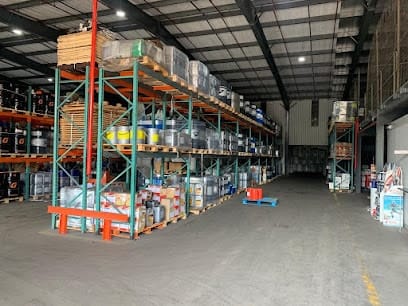
In the Durban area, TCC Warehouse operates as a practical hub within the warehouse category, focusing on logistics support and storage-related services. While operating alongside regional warehousing facilities, the business is profiled through local reviews and related service providers as a dependable point of contact for bulk lubricant distribution and associated activities. The organisation presents itself as a key local partner within the broader supply chain, offering access to both synthetic and mineral-based lubricants and greases through well-known brands.
From the available information, the main capacity of the operation centres on being a distributor and logistics facilitator rather than a consumer-facing retail shop. The business is described as a complete lubricant requirement solution, emphasising a one-stop approach to lubricant needs. This positioning suggests an emphasis on simplifying procurement, storage, and distribution for customers who require reliable, branded lubricants across multiple sectors.
Main services offered
- Distribution of Total SA and ELF branded lubricants and greases, including both synthetic and mineral-based products.
- Extensive product coverage across vehicle sectors (motorcycles, cars, trucks, buses), industrial applications, and hydraulic systems.
- Specialist applications for agriculture, marine and leisure craft, construction and mining equipment, and other heavy-duty equipment.
- Online lubricant recommendation service, supporting customers with guidance on suitable products and applications.
- Packed and bulk delivery services to meet customer requirements, including storage transitions for drums and bulk flow bins.
- Technical advisory support via Total’s technical services division, helping customers select appropriate lubricants and understand applications.
- Cross pumping of lubricants into customer storage tanks, enabling convenient transfer from drums or bulk sources.
Typical job types and industries
Based on the available content, the typical activities align with lubricant supply and related logistics for a broad spectrum of industries. These include:
- Automotive and transport sectors, covering motorcycles, scooters, cars, trucks, buses, and related maintenance operations.
- Industrial and manufacturing applications, including machinery lubrication and hydraulic systems.
- Agriculture, with lubricants suited to farming equipment and operations.
- Marine and leisure craft, supporting engines and equipment used on water.
- Construction and mining equipment, where durable lubricants and greases are essential for uptime and protection.
How requests usually work
Requests typically unfold through a combination of direct lubricant supply arrangements, bulk and packed delivery options, and technical guidance. Clients may obtain recommendations online through Total’s lubricant service, supplemented by in-person consultations as part of the logistical support. The facility appears to offer ready access to both standard and specialised lubricants, with support for understanding product suitability and cross-referencing equivalents where needed.
Customer experience and environment
Visitor feedback highlights convenient access to freight and port-related activities due to its Durban location, with impressions that the site functions effectively as a staging area for stuffing and de-stuffing containers because of its proximity to the port. External comments note friendly and informative staff, as well as helpful, practical service when selecting hydraulic oils and other lubricants. The setting near Rossburgh and the Durban port area is repeatedly mentioned as a practical advantage for businesses involved in logistics and warehousing activities.
Location and area served
The address publicly referenced places the operation at 199 South Coast Road, Rossburgh, Durban, KwaZulu-Natal. Reviews indicate convenient accessibility for businesses operating near the Port of Durban, Bayhead, and adjacent freeway routes, suggesting the warehouse serves a regional customer base within the Durban metropolitan area and surrounding industrial corridors.
Practical tips for customers
- Prepare precise product requirements before ordering, including lubricant type (synthetic vs mineral), viscosity, and packaging needs (drums or bulk).
- Utilise the online lubricant recommendation service to confirm product suitability for specific equipment or systems.
- Consider bulk delivery arrangements and cross-pumping needs if the aim is to optimise storage in bulk tanks or on-site bins.
- Leverage technical advisory support for complex applications or when comparing Total and ELF branded lubricants with competitor equivalents.
- Plan for port-adjacent logistics if tied to container stuffing or de-stuffing, taking advantage of the convenient Durban location for quick mobilisations.
Overall, the operation presents itself as a practical, reliability-focused lubricant partner within a Durban warehouse context. Its blend of branded lubricant products, delivery capabilities, and technical support positions it as a sensible choice for businesses seeking a comprehensive lubricant logistics solution in KwaZulu-Natal.
Durban
KwaZulu-Natal
South Africa
Sorry, no records were found. Please adjust your search criteria and try again.
Sorry, unable to load the Maps API.
Warehouse Services in Durban, KwaZulu-Natal
Durban, situated on the eastern coast of South Africa in KwaZulu-Natal, serves as a strategic hub for warehousing and logistics. The surrounding port facilities, major freight corridors, and coastal accessibility help warehouses in the area offer a range of storage and distribution solutions tailored to regional and national supply chains. The operating environment combines inland and sea freight dynamics, requiring facilities that combine robust security, reliable handling, and efficient dispatch capabilities.
Typical warehouse services in Durban cover several core activities designed to support business logistics. Storage options may include standard pallet storage, racked bays, bulk storage, and, in certain cases, climate-controlled units for temperature-sensitive goods. With the local climate presenting heat and humidity considerations, some sites emphasise moisture control, pest management, and appropriate insulation to protect stored items. Many facilities provide specialised services alongside storage, enabling customers to optimise stock flow and warehouse utilisation.
Order fulfilment and value-added services are common features. Receiving goods from suppliers or vendors is followed by put-away to designated zones. Technologies and practices supporting accuracy may include barcode scanning, batch tracing, and cycle counting, ensuring stock records remain aligned with physical inventory. Picking and packing services are designed to match customer requirements, whether for e-commerce orders, retail distribution, or business-to-business consignments. Some warehouses offer customised value-added activities such as repackaging, labelling, kitting, and assembly to prepare items for final delivery.
Distribution and cross-docking are frequently utilised to optimise movement through Durban's logistics network. From the warehouse, items may be staged for regional deliveries, inter-modal transfers, or direct freight to customers. Depending on the operation, dispatch processes may be organised around daily routes, dedicated carrier arrangements, or consolidated shipments to reduce travel time and costs. For international trade, some facilities provide guidance on customs procedures, duties and taxes handling, and documentation support, particularly for goods routed through the Port of Durban, which remains a key gateway for imports and exports in the region.
Security and safety are important considerations. Warehouses typically invest in perimeter fencing, access control, CCTV surveillance, and on-site staff to monitor activity. Fire suppression systems, emergency procedures, and maintenance programmes contribute to a safe environment for personnel and stored merchandise. Insurance requirements and clear allocation of liability are commonly addressed during the service agreement process. Operational resilience, including contingency plans for power supply interruptions and system outages, is also valued in Durban’s logistics landscape.
Customers engaging with Durban-based warehouse services can expect clear and practical arrangements around lead times, capacity planning, and scalability. The size and configuration of a facility influence how efficiently space can be allocated and replenished, with larger sites offering more flexibility for peak periods or seasonal demand. Proximity to major transport links—such as highways and the port—often translates into shorter transit times and can support just-in-time goals or rapid replenishment cycles. It is prudent to discuss service levels, inventory control methods, and performance reporting to ensure alignment with business objectives.
Operational considerations frequently emphasise compliance with local regulations, occupational health and safety standards, and environmental practices relevant to the KwaZulu-Natal coastline. The choice of a warehouse in Durban should reflect the nature of the goods stored, required handling capabilities, and the desired balance between cost and service quality. By focusing on reliable receiving, accurate stock control, and efficient dispatch, Durban warehouses can play a pivotal role in sustaining smooth, responsive supply chains across southern Africa.
- Storage and warehousing
- Inventory management and cycle counting
- Order fulfilment and picking
- Packing, kitting, and re-labelling
- Distribution, routing, and cross-docking
- Value-added services and product customisation
- Security, health and safety, and fire protection
- Customs guidance and import/export support (where applicable)